

Home NIV Setup: Equipment, Mask, Cleaning and Caregiver Tips
What a home NIV setup actually involves — the device, mask, circuit and filters, where to place it, the cleaning routine, power backup, and what a caregiver needs to know from day one.
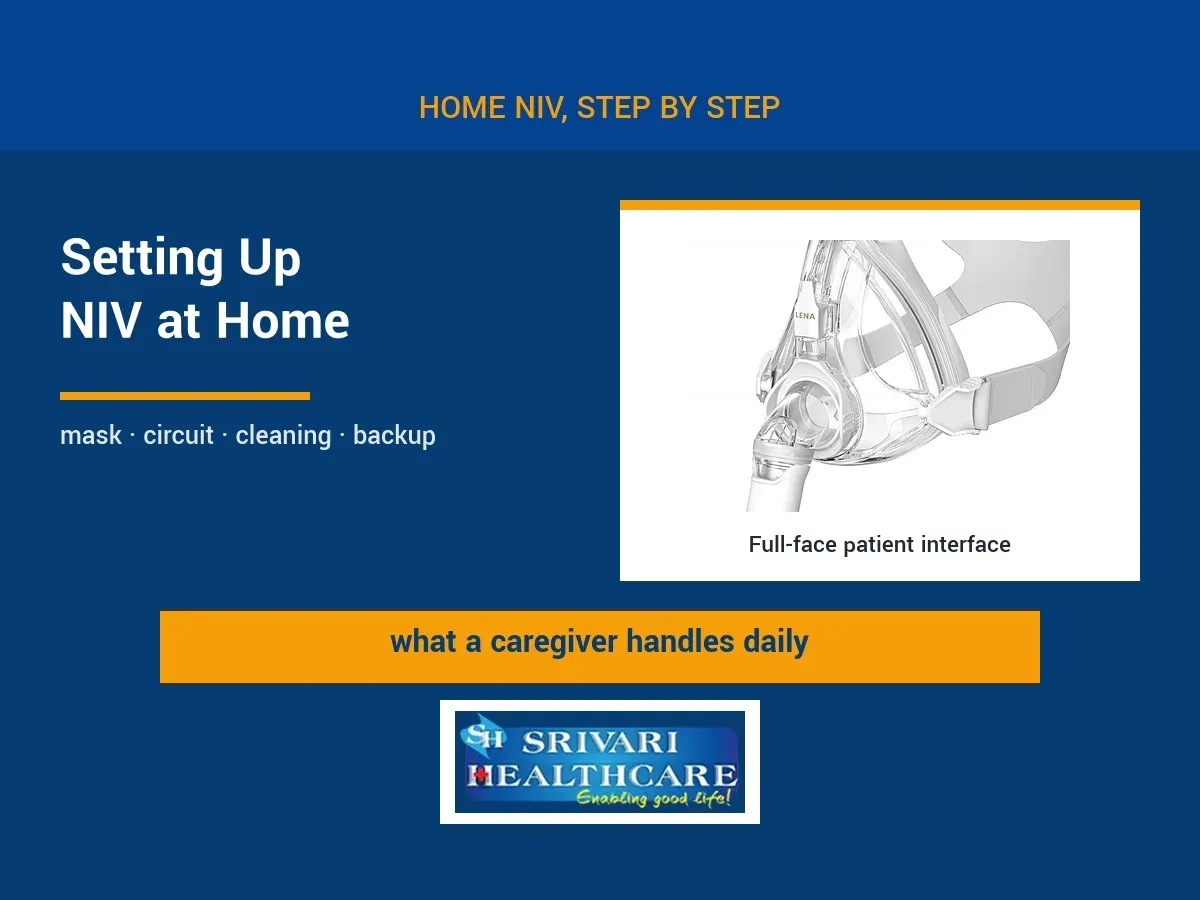
Introduction
Starting NIV therapy at home involves more than using a respiratory device such as a BiPAP machine or a home ventilator.
Patients and caregivers also need to understand the mask, breathing circuit, power supply, cleaning routine, accessories and technical support.
If you are new to the therapy itself, our complete guide to home non-invasive ventilation and CPAP vs BiPAP vs NIV comparison explain how it works.
A proper home NIV setup should always follow the healthcare professional's prescription and the equipment manufacturer's instructions.
What Equipment Is Needed for Home NIV?
A typical setup may include:
- NIV device — for example the Prisma 30ST or Prisma 25ST bilevel device
- Appropriate mask
- Breathing circuit
- Filters
- Power supply
- Humidification equipment such as the prismaAQUA humidifier where prescribed
- Battery or backup power where applicable — built into devices like the prisma VENT40 with battery backup
- Replacement accessories
The exact configuration depends on the prescribed therapy and equipment. You can compare complete setups in our BiPAP machine range and home ventilator range.
Choosing the Right Mask
The mask provides the interface between the patient and the ventilation system.
An appropriate mask should provide a suitable fit while remaining as comfortable as possible. Full-face options commonly used for NIV include the JOYCE Full Face SilkGel, JOYCEeasy Full Face, JOYCEone and Lena full face mask; some patients use a nasal interface such as CARA.
Important considerations include:
- Fit
- Comfort
- Air leakage
- Compatibility
- Ease of cleaning
- Availability of replacement parts
Mask selection should be discussed with the healthcare or respiratory-care team. Our guide to choosing the right mask covers the main types.

Understanding the Breathing Circuit
The breathing circuit connects the patient interface to the respiratory device.
Patients and caregivers should know:
- How the circuit connects
- Which components require cleaning
- Which components require replacement
- How to check for visible damage
- Which accessories are compatible
Always follow the manufacturer's instructions for the specific equipment.
Where Should the Device Be Placed?
The device should be positioned in a safe and practical location.
Consider:
- Stable placement
- Access to electrical power
- Adequate airflow around the device
- Easy access when required
- Protection from water or moisture
- Avoiding blockage of air intake areas
The breathing circuit should also be positioned so that it can be used safely and comfortably.
Cleaning and Maintenance
Regular maintenance is important for home respiratory equipment. The routine is similar to the one in our CPAP machine cleaning guide.
Depending on the device and accessories, routine care may include:
- Cleaning the mask
- Cleaning or replacing the breathing circuit
- Replacing filters
- Cleaning humidification components
- Inspecting equipment
- Replacing worn accessories
The manufacturer's instructions should always be followed.
What Should Caregivers Monitor?
Caregivers may need to understand basic equipment operation and recognise when professional assistance is required.
They should know:
- How to connect the equipment
- How to fit the mask
- How to check the circuit
- How to follow cleaning instructions
- How to respond to basic device alerts according to instructions
- How to contact technical support
Caregivers should not independently modify prescribed ventilation settings.
Power Backup for Home NIV
Power continuity may be an important consideration for patients who depend on respiratory support.
Looking for a CPAP, BiPAP or Oxygen Concentrator?
Free home delivery, professional installation by a respiratory therapist and 24/7 support across Chennai. Authorized Löwenstein Medical dealer.
Depending on the equipment, battery backup — for example on the prisma VENT40 (NIV) or the prisma VENT50-C with 12-hour battery — can provide additional flexibility during power interruptions or when the device needs to operate away from a mains power source.
Patients should discuss backup-power requirements with their equipment provider and healthcare team.
What Accessories Should You Keep Available?
Depending on the prescribed equipment, useful replacement items may include:
- Mask components
- Breathing circuit
- Filters
- Power accessories
- Humidification components
- Other manufacturer-approved accessories
Having appropriate replacement components available can help avoid unnecessary interruptions.
Professional Setup and Training
Patients and caregivers may benefit from professional equipment orientation. With our BiPAP rental and ventilator rental in Chennai, installation and caregiver training are included at delivery.
Training can include:
- Device operation
- Mask fitting
- Circuit connection
- Cleaning
- Maintenance
- Alarm awareness
- Battery operation
- Basic troubleshooting
- Contacting technical support
When Should You Contact the Equipment Provider?
Contact the equipment provider if you experience issues such as:
- Equipment malfunction
- Damaged mask
- Damaged tubing
- Repeated technical alarms
- Power-related problems
- Missing accessories
- Difficulty operating the equipment
For Srivari-supplied equipment, you can reach our team through the rental enquiry or enquiry form.
If the patient experiences a medical emergency, appropriate emergency medical care should be sought.
Frequently Asked Questions
Can caregivers change the pressure settings?
No. Prescribed settings should not be changed without professional guidance.
How often should the equipment be cleaned?
Cleaning schedules depend on the device and components. Follow the manufacturer's instructions.
Is humidification required for everyone?
Not necessarily. The requirement depends on the therapy and individual clinical needs.
What should I do if the device stops working?
Follow the equipment provider's troubleshooting instructions and contact technical support. Seek emergency medical assistance when medically necessary.
Home NIV Equipment Support
Choosing equipment from a provider that can offer setup, training, accessories and technical support can be important for long-term home use. If you prefer not to buy, monthly rentals such as the Prisma 30ST on rent or Prisma VENT 30C / 40 on rent include the same support.
If your healthcare professional has prescribed NIV, you can review NIV device and support options along with the specifications and what is included at installation.
Conclusion
A successful home NIV setup requires appropriate equipment, correct mask fitting, regular maintenance and reliable professional support.
Patients and caregivers should receive proper training before beginning home NIV and should follow both the healthcare professional's prescription and the manufacturer's instructions.
Related Pages
If you are comparing equipment or looking at what is available in Chennai:
- CPAP machines — devices, specifications and pricing
- BiPAP machines — bilevel devices and specifications
- Ventilator rental in Chennai — home ventilators on rent
- BiPAP rental in Chennai
- CPAP rental in Chennai
- CPAP vs BiPAP for COPD — which therapy fits which condition
Equipment should be selected according to the therapy prescribed by your treating healthcare professional.
More in Sleep & Respiratory Health
View all →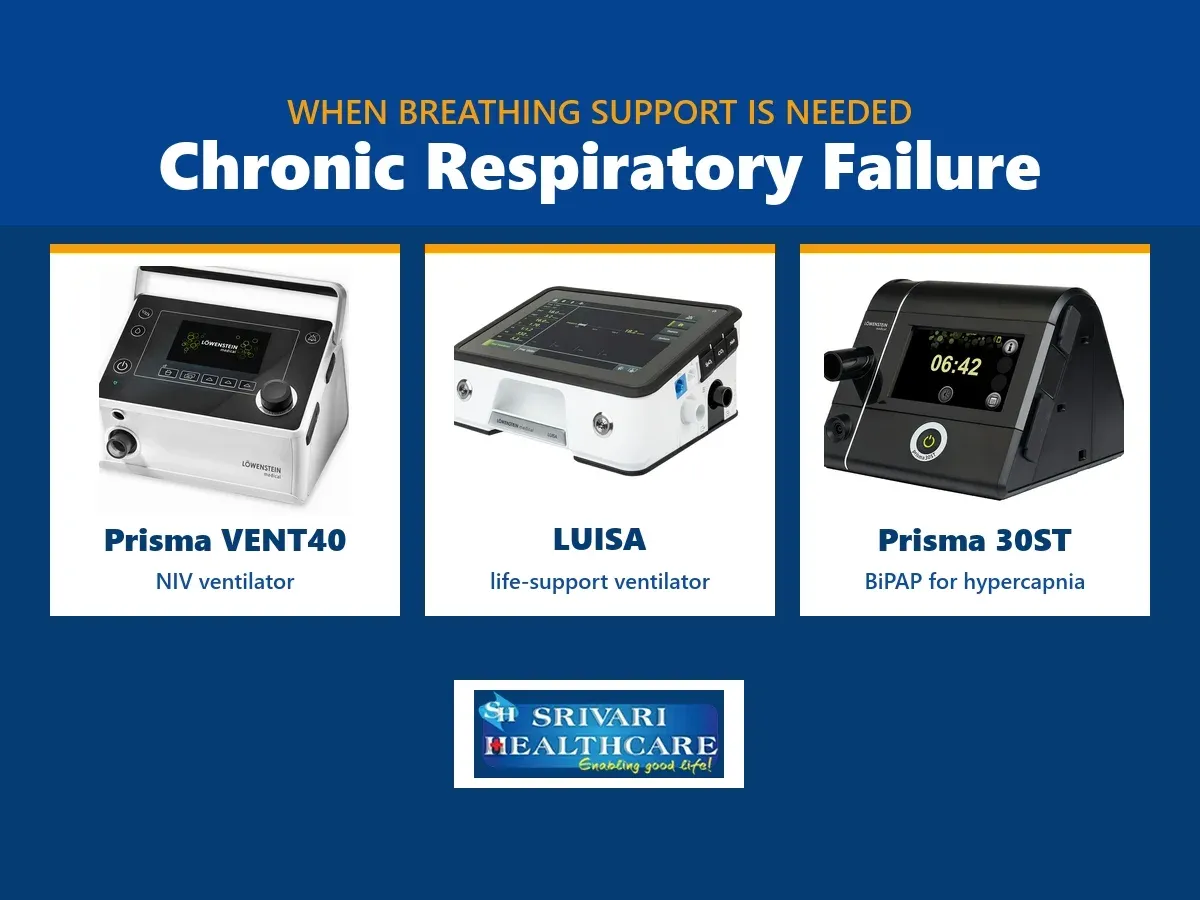 Sleep & Respiratory Health
Chronic Respiratory Failure: Understanding When Breathing Support May Be Needed
5 October 2026
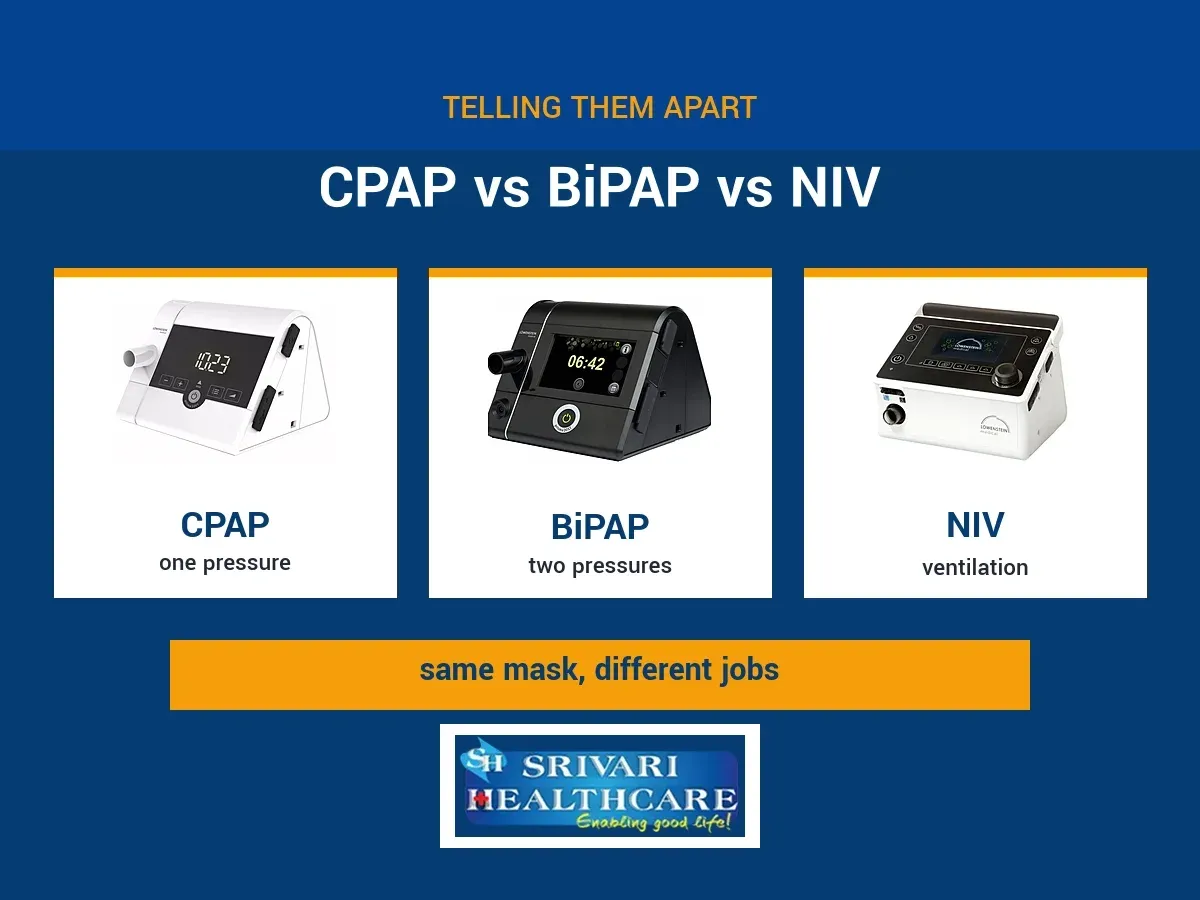 Sleep & Respiratory Health
CPAP vs BiPAP vs NIV: Understanding the Differences in Breathing Support
4 October 2026
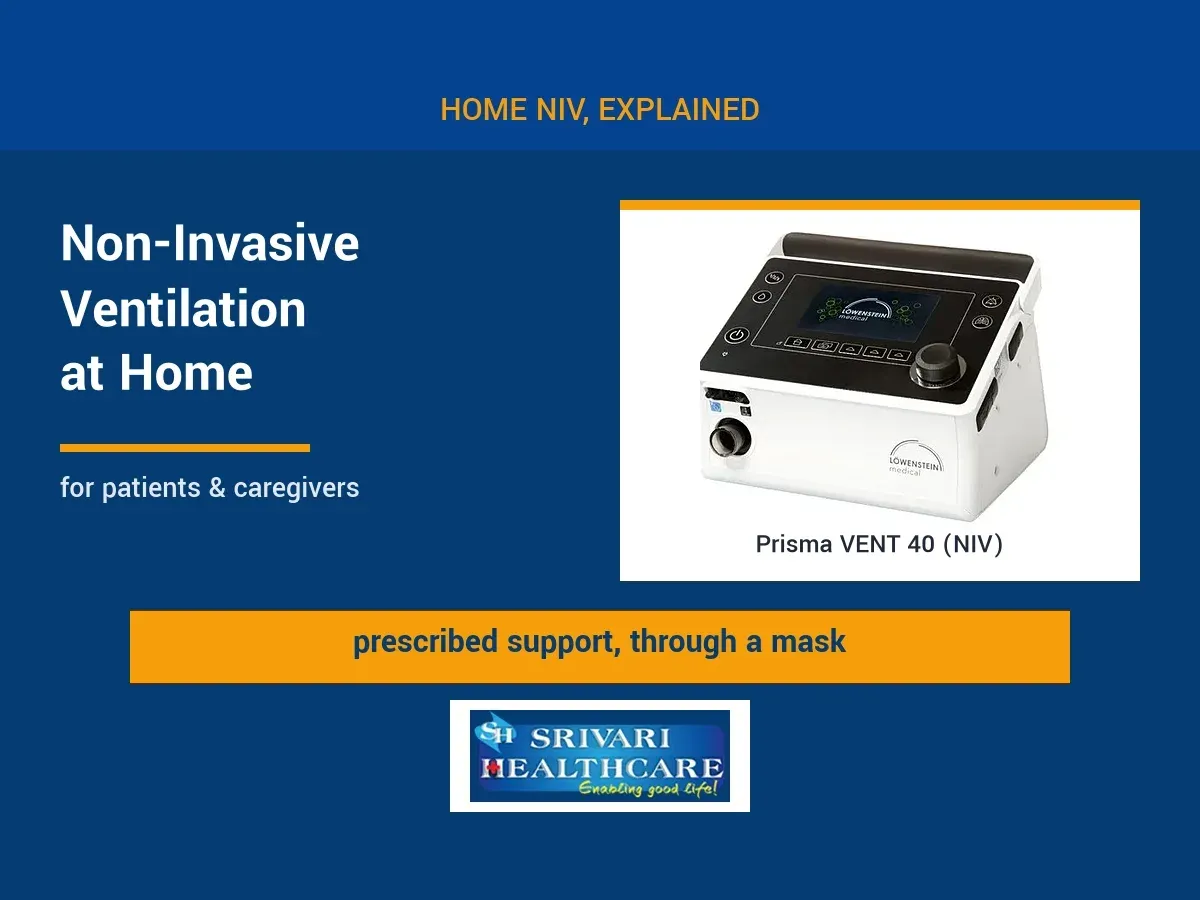 Sleep & Respiratory Health
Home Non-Invasive Ventilation (NIV): A Complete Guide for Patients and Caregivers
30 September 2026