

 Sale
SalePrisma Smart (Auto CPAP)
₹60,000+GST Extra
A practical guide to symptoms, risk factors, sleep study diagnosis, CPAP/BiPAP therapy, and home treatment support in Chennai.
Sleep apnea is a serious sleep disorder where breathing repeatedly stops and starts during sleep. If you snore loudly and feel tired even after a full night's sleep, you might have sleep apnea.
Sleep apnea causes repeated pauses or reductions in breathing while asleep, often followed by gasping, snoring, or brief awakenings.
Even if the patient spends enough hours in bed, untreated sleep apnea can prevent deep, restorative sleep.
Diagnosis usually starts with a sleep study, followed by CPAP, BiPAP, lifestyle changes, or specialist care depending on severity.
which is the more common form that occurs when throat muscles relax and block the flow of air into the lungs
which occurs when the brain doesn't send proper signals to the muscles that control breathing
complex sleep apnea, which happens when someone has OSA — diagnosed with a sleep study — that converts to CSA when receiving therapy for OSA
Clinical history: snoring, witnessed pauses, sleepiness, weight, neck size, and medical conditions
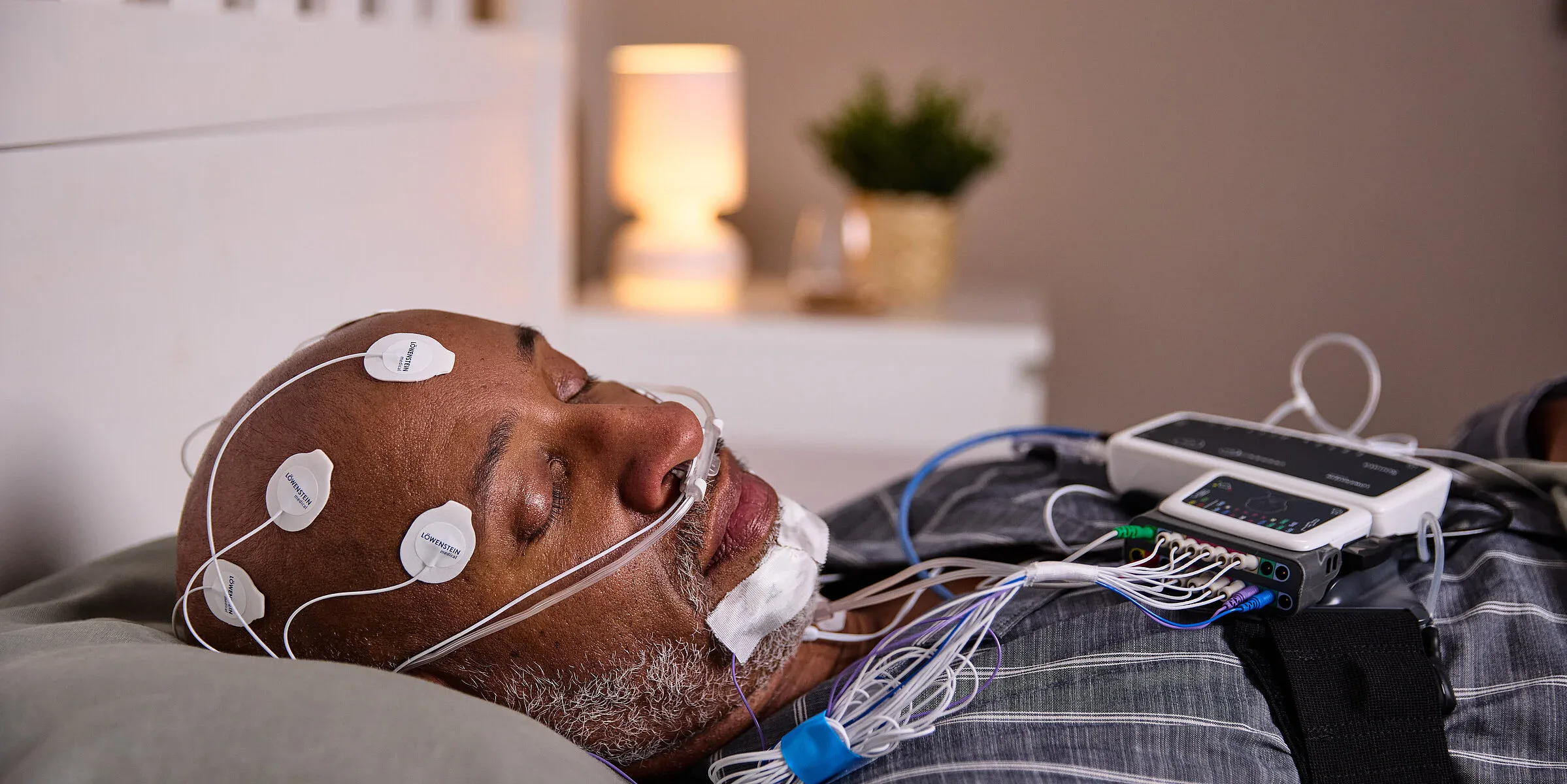
Sleep study: home sleep test or in-lab polysomnography to measure breathing, oxygen, sleep stages, and events
Severity grading: apnea-hypopnea index, oxygen drops, symptoms, and heart or lung risk
Treatment planning: CPAP, Auto CPAP, BiPAP, mask selection, pressure settings, and follow-up
A CPAP machine keeps the airway open with gentle positive pressure. Auto CPAP adjusts pressure through the night based on breathing needs.
BiPAP provides different inhale and exhale pressures. It may be considered when CPAP is not tolerated or when more ventilatory support is needed.
A sleep study confirms the type and severity of sleep apnea so treatment can be prescribed correctly.
SaleA CPAP machine delivers steady airflow to help keep the airway open during sleep. Srivari Healthcare supports patients with device selection, mask fitting, demo, rental or purchase options, and follow-up support in Chennai.
Common signs include loud snoring, witnessed breathing pauses, gasping during sleep, morning headaches, and daytime sleepiness. A sleep study is needed to confirm it.
CPAP is a common first-line treatment for obstructive sleep apnea. Some patients may need Auto CPAP, BiPAP, lifestyle changes, or specialist review.
Untreated sleep apnea can be associated with high blood pressure, irregular heart rhythm, and higher cardiovascular risk. Medical evaluation is important.
Book a sleep study or speak with Srivari Healthcare about CPAP and BiPAP therapy options.