

Understanding COPD
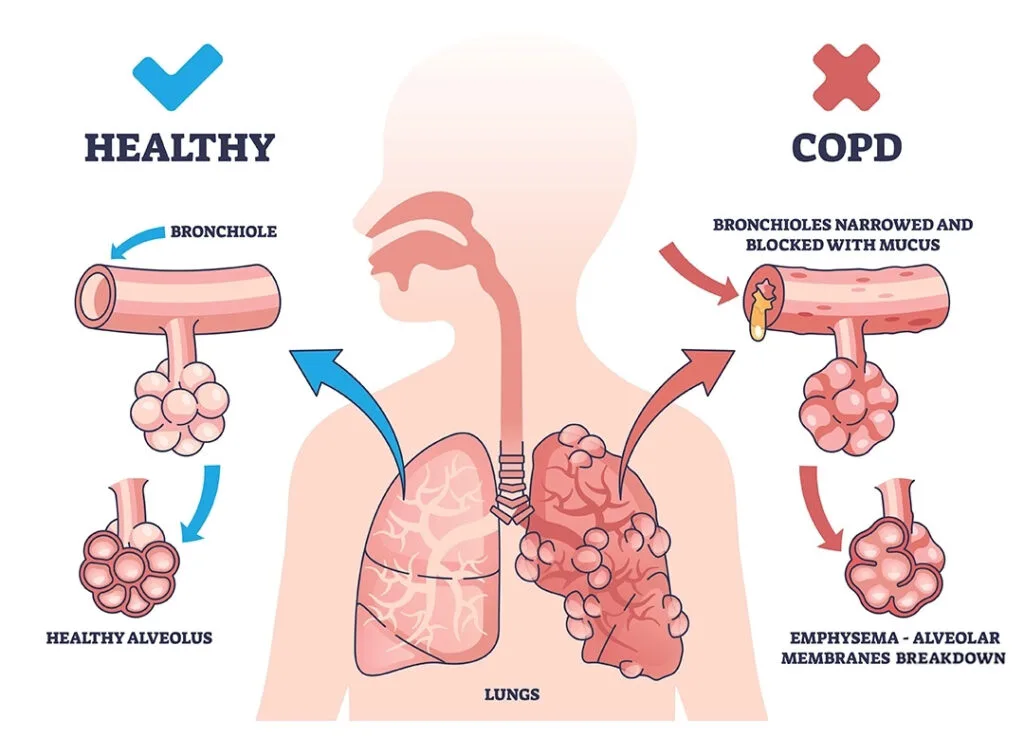
Chronic Obstructive Pulmonary Disease (COPD) is a long-term lung condition that makes it difficult to empty air from the lungs. Narrowed airways, trapped air, and damaged lung tissue can make breathing harder and leave the patient tired even after simple activity.
Chronic bronchitis
Inflammation and excess phlegm narrow the breathing tubes. This can cause long-term cough, mucus, wheezing, and repeated chest infections.
Emphysema
Damage to the air sacs reduces their elasticity. Air gets trapped inside the lungs, making exhalation harder and causing breathlessness.
Signs that should be discussed with a doctor
- Increasing breathlessness during walking, climbing stairs, or daily activity
- Frequent cough, especially with mucus or phlegm
- Wheezing or noisy breathing
- Chest tightness
- Repeated chest infections or slow recovery after infections
- Tiredness because breathing takes more effort
Seek urgent care if needed
- Severe breathlessness at rest
- Bluish lips or fingertips
- Confusion, drowsiness, or unusual sleepiness
- Oxygen saturation lower than the doctor-recommended range
- Fever, chest pain, or rapidly worsening cough
How COPD is diagnosed
Breathlessness and cough should not be dismissed as normal ageing. Doctors commonly use spirometry, a simple breathing test, to measure how much air the patient can blow out and how quickly. Oxygen levels, chest imaging, and blood tests may also be used depending on symptoms.
COPD treatment options
Stop smoking
If the patient smokes, quitting is the most important step. It slows further lung damage and improves treatment response.
Inhalers and medicines
Bronchodilators, inhaled steroids, antibiotics, or other medicines may be prescribed depending on symptoms and infection risk.
Pulmonary rehabilitation
Exercise training, breathing techniques, nutrition advice, and education help patients manage COPD more confidently.
Oxygen therapy
Supplemental oxygen may be recommended when blood oxygen remains low. It should be used at the prescribed flow rate.
BiPAP or NIV support
For selected COPD patients with high CO2 or chronic respiratory failure, BiPAP/NIV can reduce breathing effort and support ventilation.
Respiratory support for COPD
BiPAP support for COPD
Learn when BiPAP may help COPD patients with chronic hypoventilation or high CO2.
Learn moreOxygen concentrators for COPD
Review oxygen therapy options for prescribed home oxygen support.
Learn moreHome ventilation guide
Understand NIV, home ventilator setup, caregiver checks, and safety basics.
Learn moreDaily COPD care basics
Follow the doctor's inhaler plan, keep rescue medicines accessible, avoid smoke and dust, clean oxygen or BiPAP accessories as instructed, monitor oxygen saturation when prescribed, and keep follow-up visits regular. Any change in symptoms should be reviewed early.
Frequently asked questions
Is COPD the same as asthma?
No. Both can cause breathing difficulty, but COPD is usually progressive and commonly linked to long-term lung damage. A doctor can confirm the diagnosis with tests such as spirometry.
Can COPD be cured?
COPD usually cannot be fully cured, but symptoms and flare-ups can be managed with the right treatment plan, smoking cessation, rehabilitation, medicines, and prescribed respiratory support.
When does a COPD patient need oxygen or BiPAP?
Oxygen may be needed when blood oxygen remains low. BiPAP/NIV may be considered when ventilation is poor, carbon dioxide is high, or breathing effort is excessive. Both require medical prescription.
Need COPD equipment guidance?
Srivari Healthcare can help with prescribed oxygen concentrators, BiPAP/NIV devices, rentals, installation, and patient support in Chennai.