

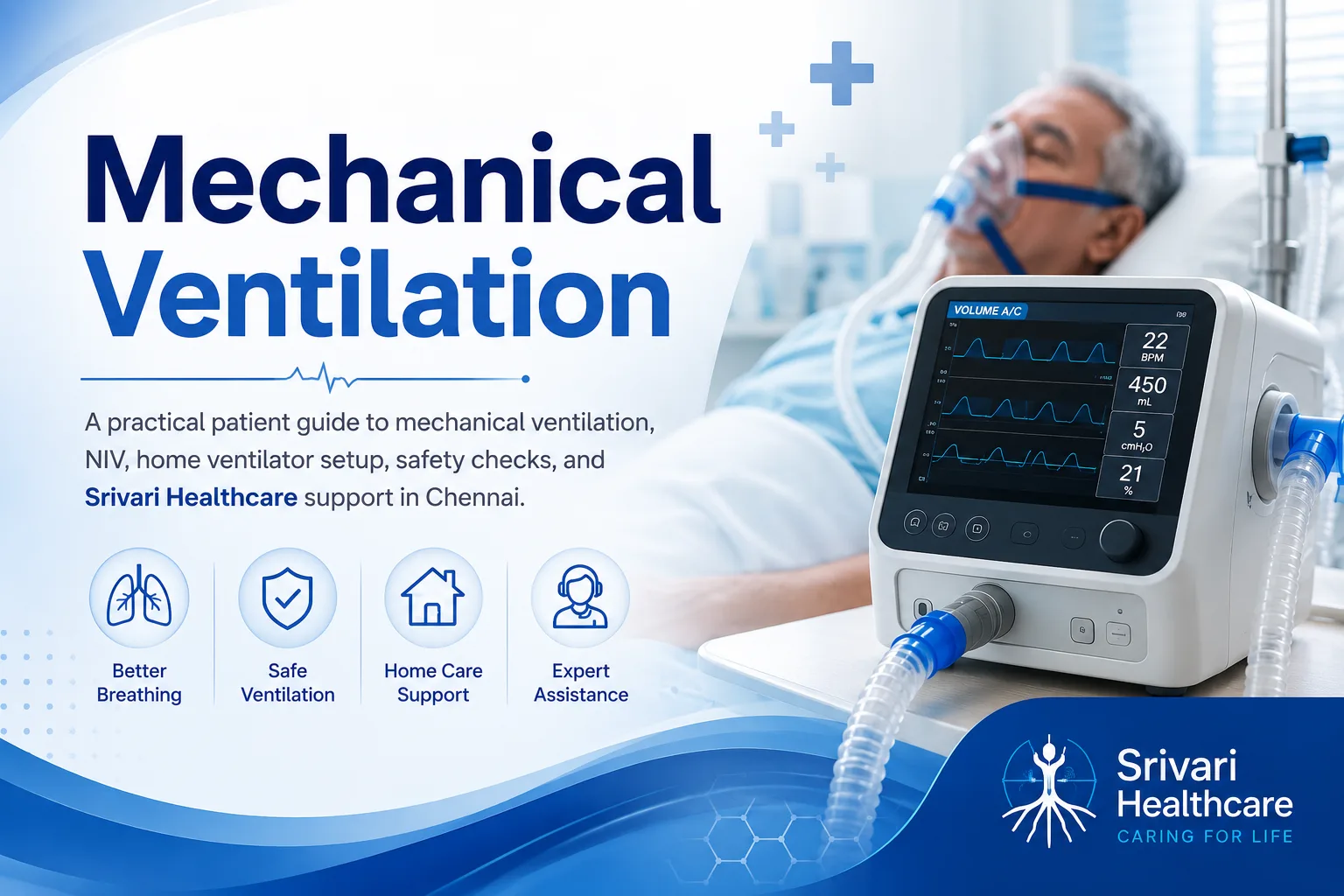
Mechanical ventilation and home NIV
Mechanical ventilation is breathing support used when a patient cannot breathe effectively on their own. In hospitals it may be used during critical illness. At home, non-invasive ventilation can support selected patients with chronic respiratory conditions under a doctor's guidance.
What ventilation does
A ventilator supports breathing when the lungs or breathing muscles cannot move enough air on their own. It helps oxygen enter the body, removes carbon dioxide, and reduces the effort needed to breathe.
NIV for home care
Non-invasive ventilation uses a mask interface instead of a breathing tube. For suitable patients, NIV can support long-term therapy at home under medical supervision.
When it is needed
Doctors may recommend ventilatory support for chronic respiratory failure, high CO2, low oxygen levels, COPD, neuromuscular weakness, post-ICU recovery, or sleep-related hypoventilation.
When ventilation may be required
- Low blood oxygen or rising carbon dioxide levels
- Breathing muscles are weak or tiring quickly
- Severe COPD, neuromuscular disease, spinal cord injury, or post-ICU recovery
- Sleep-related hypoventilation that needs more support than CPAP
What support should achieve
The goal is to improve comfort, reduce work of breathing, support oxygen and carbon dioxide control, and help the patient rest. Settings must be prescribed and reviewed by the treating doctor.
Home ventilator setup process
Doctor prescription and therapy settings review
Correct mask selection and leak check
Ventilator setup, humidifier or oxygen connection when needed
Caregiver training for alarms, cleaning, filters, and daily checks
Follow-up support for comfort, mask fit, and therapy usage
Ventilator options from Srivari
Luisa Ventilator
Portable home ventilator for invasive and non-invasive ventilation support.
View productPrisma VENT 40
Advanced NIV support with pressure range up to 40 cmH2O.
View productPrisma VENT 40 NIV with Battery Backup
NIV ventilator option for home and hospital use with backup power support.
View productSafety checks for caregivers
Check mask fit, tubing, filters, alarms, humidifier water level, power supply, and oxygen connection every day. Any sudden breathlessness, repeated alarms, low oxygen saturation, drowsiness, or confusion needs urgent clinical review.
Frequently asked questions
Does a ventilator cure the disease?
No. A ventilator supports breathing while the underlying condition is treated or managed by the medical team.
Can ventilation be used at home?
Yes, selected patients can use home NIV or home ventilators after a doctor prescribes therapy settings and caregivers are trained.
What is the difference between NIV and invasive ventilation?
NIV uses a mask over the nose or face. Invasive ventilation uses a tracheostomy or endotracheal tube and is generally used for more critical support.
Need a home ventilation consultation?
Srivari Healthcare can help with ventilator rental or purchase, installation, caregiver training, and ongoing support in Chennai.