
Home Non-Invasive Ventilation (NIV): A Complete Guide for Patients and Caregivers
What home non-invasive ventilation involves — how NIV works, the equipment and mask fit that make it tolerable, what caregivers need to know, power backup, cleaning and when to call your clinician. Written for patients and families who have been prescribed home NIV.
What Is Home Non-Invasive Ventilation?
Home non-invasive ventilation, commonly called home NIV, is a form of breathing support delivered through a mask rather than through an invasive airway.
NIV may be recommended when a person's breathing is not providing adequate ventilation and a healthcare professional determines that assisted ventilation is appropriate.
Unlike invasive ventilation, NIV does not require an endotracheal tube. Instead, the patient usually receives respiratory support through a specially fitted mask connected to a ventilation device.
The type of ventilation, pressure settings and duration of therapy depend on the individual's medical condition and prescription.
Why Is NIV Used at Home?
Some patients may require ongoing respiratory support outside a hospital environment. When clinically appropriate, home NIV can allow prescribed respiratory support to continue as part of a long-term care plan.
A healthcare professional may consider home NIV in certain situations involving inadequate ventilation, depending on the patient's condition and clinical assessment.
The decision should always be made by the treating doctor or respiratory-care professional.
How Does Home NIV Work?
A typical home NIV setup may include:
Patient → NIV Mask → Breathing Circuit → NIV Device → Prescribed Ventilatory Support
The mask provides the interface between the patient and the breathing circuit. The device then provides the prescribed level and type of respiratory assistance.
Correct mask fitting, appropriate settings and proper device setup are important for effective and comfortable therapy.
What Equipment Is Needed for Home NIV?
A home NIV setup may include:
- NIV device
- Appropriate mask
- Breathing circuit
- Filters
- Humidification equipment when prescribed
- Power supply
- Battery or backup power where required
- Replacement accessories
The exact equipment required depends on the prescribed therapy and the device being used.
Why Is Mask Fit Important?
Mask comfort can have a major effect on the experience of home NIV.
A mask that does not fit appropriately may result in:
- Air leakage
- Discomfort
- Skin irritation
- Difficulty maintaining therapy
- Sleep disturbance
Patients should work with their healthcare provider or respiratory-care team to select and fit an appropriate interface.
What Should Caregivers Know?
Caregivers may need to understand basic aspects of the prescribed NIV setup, including:
- How to connect the equipment
- How to position the mask correctly
- Basic cleaning procedures
- How to respond to device alarms according to instructions
- When to contact the healthcare provider
- How to arrange replacement accessories
- How to manage power interruptions
Caregivers should not independently change prescribed ventilation settings.
What About Power Backup?
For patients who depend on respiratory support, power continuity can be an important consideration.
Depending on the device and setup, battery backup may help provide additional flexibility during power interruptions or when the device needs to be moved away from a mains power source.
The required backup duration should be discussed with the healthcare and equipment-support team.
Cleaning and Maintenance
Regular cleaning and maintenance should follow the manufacturer's instructions.
Looking for a CPAP, BiPAP or Oxygen Concentrator?
Free home delivery, professional installation by a respiratory therapist and 24/7 support across Chennai. Authorized Löwenstein Medical dealer.
Patients and caregivers should pay attention to:
- Mask cleaning
- Circuit cleaning or replacement
- Filter replacement
- Humidifier care, where applicable
- Device inspection
- Accessory replacement
The manufacturer's instructions should always take priority over general online advice.
When Should You Contact a Healthcare Professional?
Patients should seek professional guidance if they experience problems with their prescribed therapy or equipment.
Examples may include:
- Persistent difficulty using the mask
- Significant air leakage
- Repeated alarms
- Equipment malfunction
- New or worsening breathing symptoms
- Difficulty tolerating prescribed therapy
Urgent symptoms should be addressed through appropriate medical services rather than relying on online information.
Choosing Home NIV Equipment
When a clinician has prescribed home NIV, patients and caregivers may consider:
- Required ventilation modes
- Device specifications
- Mask compatibility
- Comfort and noise
- Battery or power-backup options
- Installation
- Caregiver training
- Maintenance
- Technical support
- Availability of replacement accessories
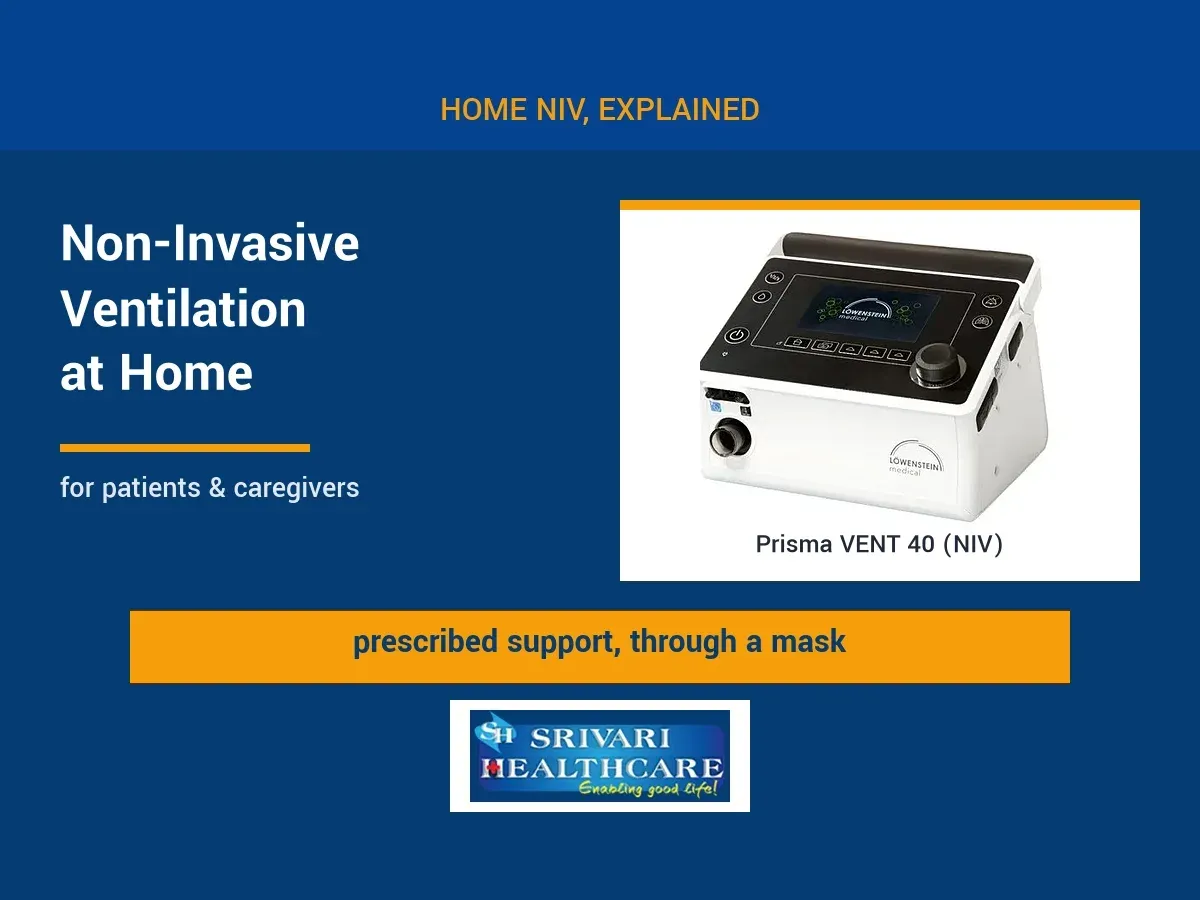
For people who have been prescribed NIV and are evaluating suitable equipment, you can view the Prisma VENT 40 NIV ventilator and its specifications on our product page.
Frequently Asked Questions
Is home NIV suitable for everyone?
No. Home NIV is prescribed based on the patient's medical condition and clinical assessment.
Can patients change NIV pressure settings themselves?
Prescribed settings should not be changed without guidance from the treating healthcare professional.
Does home NIV require a mask?
Non-invasive ventilation generally uses a mask or another non-invasive patient interface.
Is battery backup necessary?
The need for battery backup depends on the patient's therapy requirements, device configuration and power situation.
Conclusion
Home NIV can form an important part of respiratory support for appropriately selected patients. Successful home use involves more than the ventilation device itself.
Correct prescription, mask fitting, equipment setup, caregiver education, maintenance and ongoing professional support all contribute to a safe home NIV process.
Patients considering home NIV should discuss their individual requirements with their doctor or respiratory-care professional.
More in Sleep & Respiratory Health
View all → Sleep & Respiratory Health
Best Auto CPAP Machine in India – Complete Buying Guide (2026)
30 April 2026
 Sleep & Respiratory Health
Sleep Lab Test in Chennai – Complete Guide to Better Sleep Health
29 April 2026
