

CPAP vs BiPAP vs NIV: Understanding the Differences in Breathing Support
CPAP, BiPAP and NIV all use a mask, but they are not the same therapy. What each term means, how they differ, when a clinician may consider each one, and the questions worth asking before any equipment is bought.
Introduction
CPAP, BiPAP and NIV are commonly discussed when people are researching breathing support. Although these therapies may use a mask, they are not identical and may serve different clinical purposes.
Understanding the basic differences can help patients and caregivers have a more informed conversation with their healthcare professional.
What Is CPAP?
CPAP stands for Continuous Positive Airway Pressure.
CPAP provides continuous positive airway pressure during breathing.
It is commonly associated with sleep-related breathing disorders such as obstructive sleep apnea.
The pressure level and treatment approach are determined according to the individual's clinical requirements. Our CPAP machine range covers the devices commonly prescribed for this.
What Is BiPAP?
BiPAP is commonly used to describe bilevel positive airway pressure therapy.
Unlike CPAP, bilevel therapy can provide different pressure levels during inhalation and exhalation.
This can provide a different form of breathing support when compared with continuous positive airway pressure.
The appropriate pressure and therapy settings should be determined by a healthcare professional. Devices for this sit in our BiPAP machine range.
What Is NIV?
NIV stands for Non-Invasive Ventilation.
It describes respiratory support delivered without an invasive airway.
NIV can involve different ventilation modes and approaches depending on the device and the patient's clinical requirements.
Therefore, NIV is a broader term than simply referring to a particular pressure therapy.
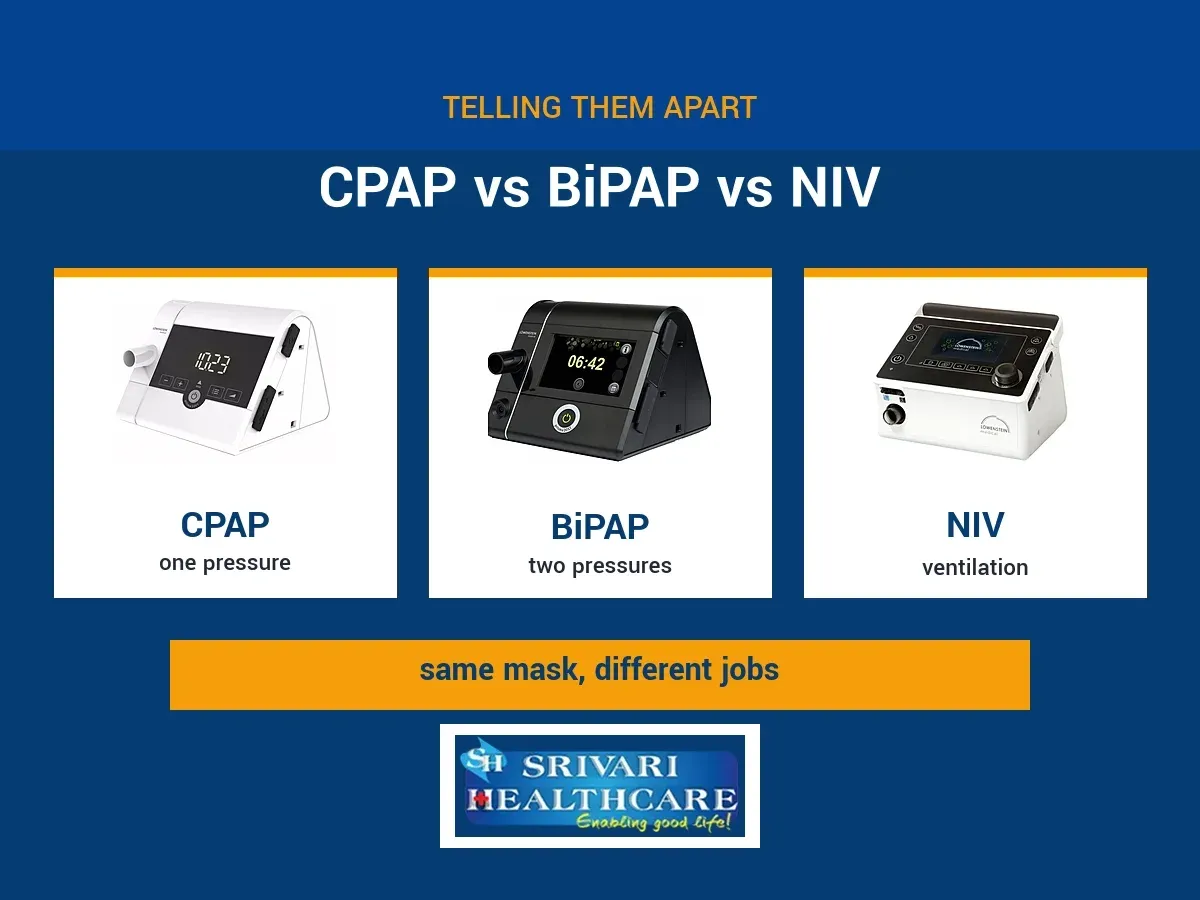
CPAP vs BiPAP vs NIV: The Basic Difference
A simple way to understand the terminology is:
- CPAP — provides continuous positive airway pressure.
- BiPAP / bilevel therapy — can provide different pressure levels for inhalation and exhalation.
- NIV — refers more broadly to non-invasive ventilatory support.
The exact therapy required depends on the patient's condition and clinical assessment.
When Is CPAP Used?
CPAP is commonly used when continuous positive airway pressure is appropriate.
It is widely associated with the management of obstructive sleep apnea.
However, the suitability of CPAP depends on the individual's diagnosis and treatment plan.
When Is Bilevel Therapy Used?
Bilevel therapy may be considered when different inspiratory and expiratory pressure levels are required.
The appropriate settings depend on the patient's respiratory needs and the prescription provided by the healthcare professional.
When May NIV Be Considered?
NIV may be considered when a patient requires ventilatory support without an invasive airway.
Depending on the patient's condition, NIV may be used in clinical or home-care environments.
The decision to use NIV should be made by the treating healthcare professional.
Is NIV the Same as BiPAP?
Not necessarily.
BiPAP is commonly used to describe bilevel positive airway pressure, whereas NIV is a broader term for non-invasive ventilatory support.
Some NIV devices can provide multiple ventilation modes, depending on the model and clinical requirements.
Does a More Advanced Device Mean Better Treatment?
Not automatically.
The goal is not to choose the device with the most features. The goal is to use equipment that supports the therapy prescribed for the patient.
Important considerations include:
Looking for a CPAP, BiPAP or Oxygen Concentrator?
Free home delivery, professional installation by a respiratory therapist and 24/7 support across Chennai. Authorized Löwenstein Medical dealer.
- Required ventilation mode
- Pressure/support requirements
- Patient interface
- Comfort
- Monitoring
- Accessories
- Power requirements
- Professional support
Questions to Ask Your Doctor
Before purchasing respiratory equipment, patients can ask:
- What type of respiratory support has been prescribed?
- Which ventilation mode is required?
- What pressure or support range is required?
- What type of mask should be used?
- Is humidification required?
- Is battery backup required?
- How frequently should the therapy be used?
- What follow-up is required?
Frequently Asked Questions
Is CPAP the same as NIV?
No. CPAP provides continuous positive airway pressure, while NIV refers more broadly to non-invasive ventilatory support.
Is BiPAP a type of NIV?
Bilevel positive airway pressure is a non-invasive form of respiratory support. The exact terminology and device configuration can vary.
Can I choose CPAP or BiPAP myself?
The appropriate therapy should be determined with the treating healthcare professional.
Does everyone who has breathing problems need NIV?
No. The need for NIV depends on the patient's medical condition and clinical assessment.
Choosing an NIV Device
Once NIV has been prescribed, equipment should be selected according to the required therapy.
Patients may need to compare ventilation modes, pressure range, display and monitoring, mask compatibility, noise, battery options, accessories, installation and technical support.
If your healthcare professional has prescribed NIV, you can review NIV device options along with their specifications and available support.
Conclusion
CPAP, BiPAP and NIV describe different approaches to non-invasive respiratory support.
Understanding these terms can help patients and caregivers understand why a particular therapy or device has been recommended.
The appropriate form of respiratory support should always be determined by a qualified healthcare professional based on the patient's individual requirements.
Related Pages
If you are comparing equipment or looking at what is available in Chennai:
- CPAP machines — devices, specifications and pricing
- BiPAP machines — bilevel devices and specifications
- Ventilator rental in Chennai — home ventilators on rent
- BiPAP rental in Chennai
- CPAP rental in Chennai
Equipment should be selected according to the therapy prescribed by your treating healthcare professional.
More in Sleep & Respiratory Health
View all →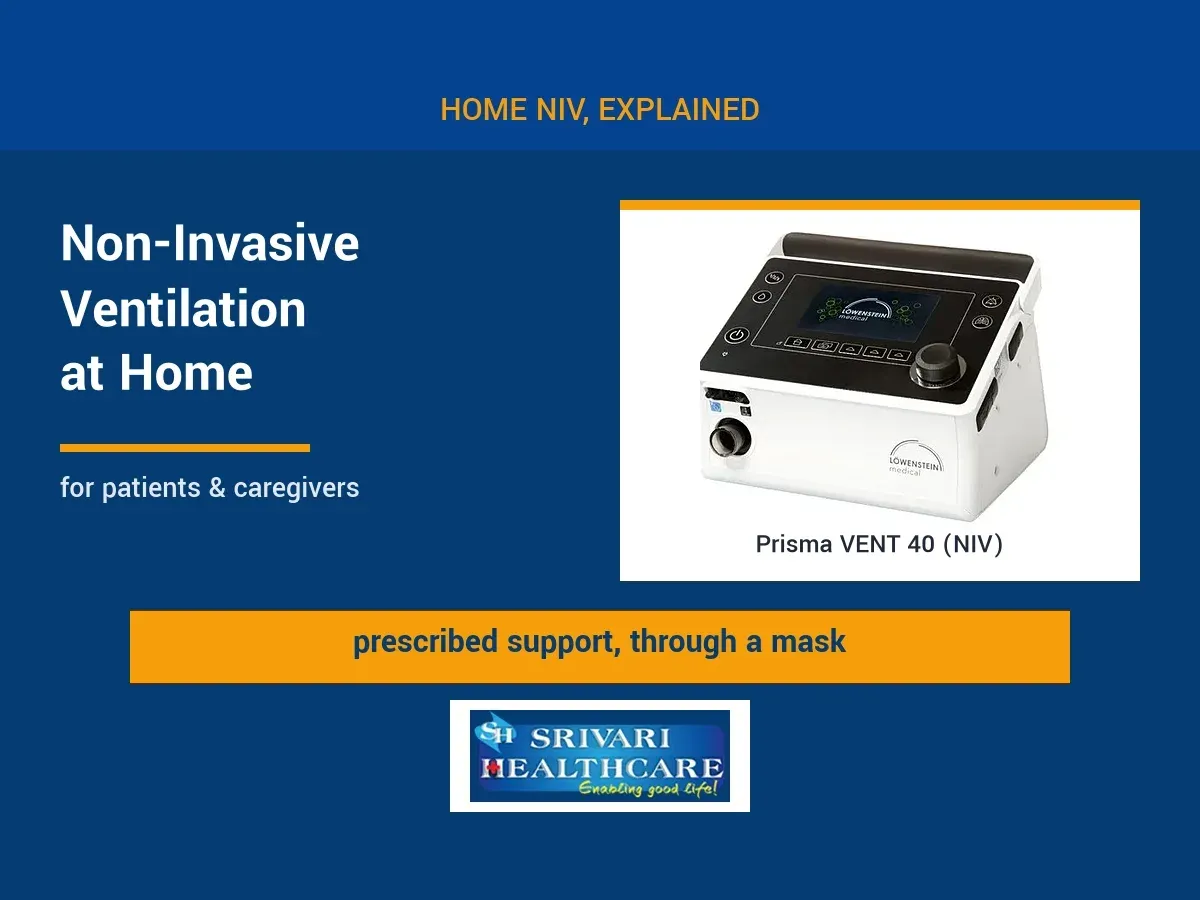 Sleep & Respiratory Health
Home Non-Invasive Ventilation (NIV): A Complete Guide for Patients and Caregivers
30 September 2026
 Sleep & Respiratory Health
Best Auto CPAP Machine in India – Complete Buying Guide (2026)
30 April 2026
 Sleep & Respiratory Health
Sleep Lab Test in Chennai – Complete Guide to Better Sleep Health
29 April 2026