

Chronic Respiratory Failure: Understanding When Breathing Support May Be Needed
What chronic respiratory failure is, the difference between oxygenation and ventilation, how it is evaluated, and where non-invasive ventilation fits into a long-term respiratory care plan.
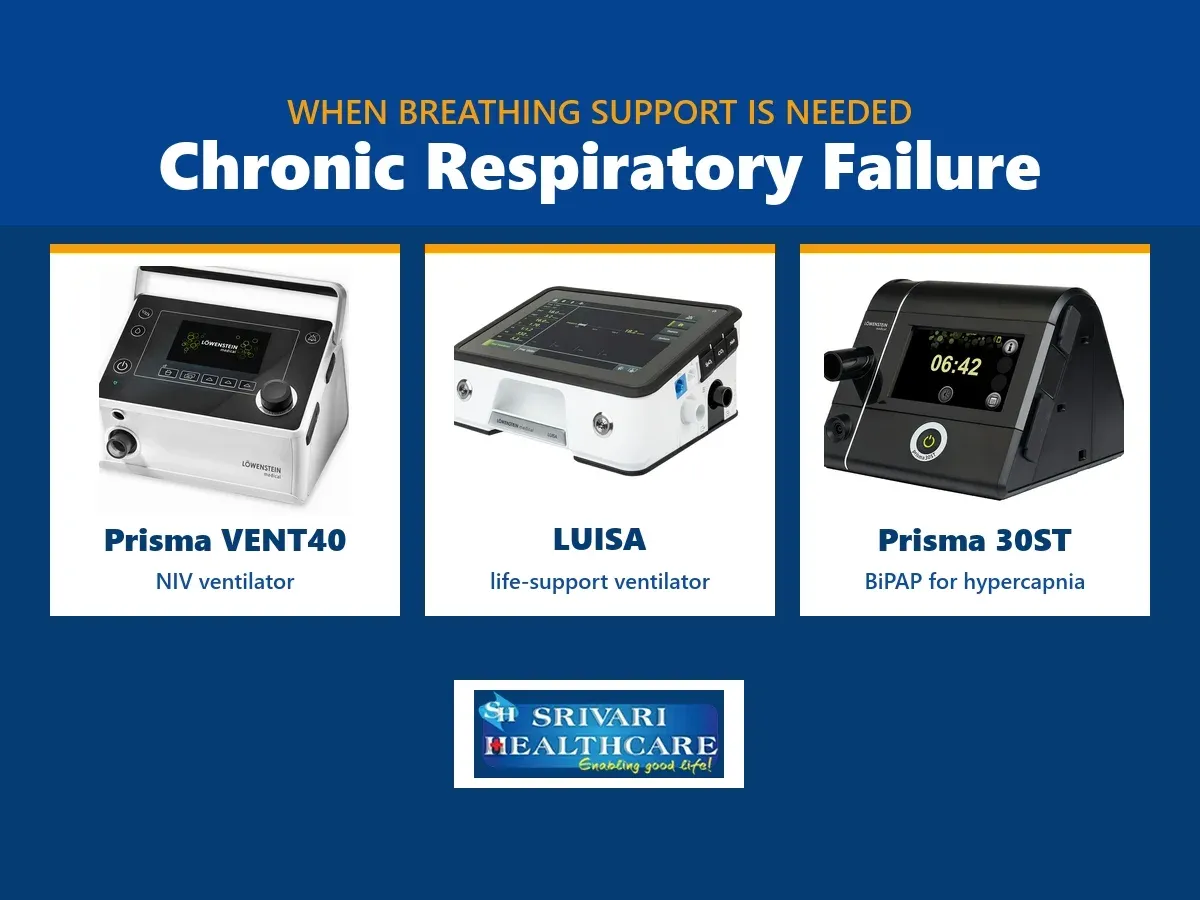
Introduction
Breathing is responsible for bringing oxygen into the body and removing carbon dioxide.
When the respiratory system cannot adequately perform these functions over an extended period, a person may develop chronic respiratory failure.
Understanding the condition and the role of respiratory support can help patients and caregivers have better conversations with their healthcare team.
What Is Chronic Respiratory Failure?
Chronic respiratory failure is a condition in which the respiratory system is unable to adequately maintain normal gas exchange.
Depending on the underlying condition, problems may involve oxygenation, ventilation or both.
The condition requires medical evaluation and appropriate management.
What Can Cause Chronic Respiratory Failure?
Several medical conditions can affect breathing over the long term.
Depending on the individual, contributing conditions may include:
- Chronic respiratory diseases
- Certain neuromuscular disorders
- Chest-wall disorders
- Severe sleep-related breathing problems
- Other conditions affecting ventilation
The underlying cause needs to be assessed by a qualified healthcare professional.
Oxygenation vs Ventilation
Oxygenation and ventilation are related but different concepts.
Oxygenation refers to getting oxygen into the bloodstream.
Ventilation refers to moving air into and out of the lungs and is important for removing carbon dioxide.
This distinction is important because different patients may require different forms of respiratory support.
What Is Hypercapnia?
Hypercapnia means an elevated level of carbon dioxide in the blood.
In some patients, inadequate ventilation can contribute to carbon dioxide retention.
Healthcare professionals may use appropriate testing and clinical assessment to determine whether a patient has a ventilation problem.
How Is Chronic Respiratory Failure Evaluated?
Evaluation depends on the individual and underlying condition.
A healthcare professional may consider:
- Medical history
- Physical examination
- Oxygen measurements
- Carbon dioxide measurements
- Sleep-related assessments
- Pulmonary function testing
- Other diagnostic tests
The exact assessment will depend on the patient's situation.
When May Breathing Support Be Needed?
Some patients with chronic respiratory problems may require additional respiratory support.
Depending on the condition, a healthcare professional may consider:
- Oxygen therapy
- Positive airway pressure
- Non-invasive ventilation
- Other forms of respiratory support
The appropriate approach depends on the underlying medical problem and clinical assessment.
What Is the Role of NIV?
For appropriately selected patients, non-invasive ventilation may be considered when ventilatory assistance is required without an invasive airway.
NIV may provide prescribed respiratory support through a suitable patient interface such as a mask.
The ventilation mode and settings should be selected by the treating healthcare professional. If you are new to the term, our guide to home non-invasive ventilation covers how it works in practice.
Can Respiratory Support Be Provided at Home?
Some patients may receive long-term respiratory support at home when their healthcare team determines that home therapy is appropriate.
Home respiratory support may involve:
- Prescribed ventilation
- Mask/interface
- Breathing circuit
- Device monitoring
- Caregiver support
- Cleaning and maintenance
- Regular professional follow-up
What Should Patients Ask Their Doctor?
Patients and caregivers can ask:
Looking for a CPAP, BiPAP or Oxygen Concentrator?
Free home delivery, professional installation by a respiratory therapist and 24/7 support across Chennai. Authorized Löwenstein Medical dealer.
- What is causing the breathing problem?
- Is the problem mainly related to oxygenation or ventilation?
- Is respiratory support required?
- What type of therapy is appropriate?
- How often should it be used?
- What equipment is needed?
- What monitoring is required?
- What should caregivers know?
When Should Medical Advice Be Sought?
New, severe or worsening breathing difficulties should be assessed by a healthcare professional.
An online article should not be used to diagnose respiratory failure or determine a patient's ventilation settings.
Patients should follow the advice of their treating medical team.
Frequently Asked Questions
Is chronic respiratory failure always treated with a ventilator?
No. Treatment depends on the underlying cause and individual clinical assessment.
Is oxygen therapy the same as ventilation?
No. Oxygen therapy and ventilatory support address different aspects of respiratory care.
Can chronic respiratory failure be managed at home?
Some appropriately selected patients may receive long-term respiratory support at home under professional supervision.
Who decides whether NIV is appropriate?
The treating doctor or qualified respiratory-care professional determines whether NIV is appropriate.
Choosing Equipment for Home NIV
If NIV has been prescribed, equipment should be selected according to the required therapy.
Important considerations may include required ventilation modes, pressure and support range, mask compatibility, comfort, power backup, accessories, monitoring and technical support.
Patients who have already been prescribed NIV can review NIV equipment for respiratory support along with the device specifications and support options.
Conclusion
Chronic respiratory failure can require ongoing medical assessment and respiratory support.
For some appropriately selected patients, non-invasive ventilation may form part of a long-term respiratory-care plan.
Understanding the difference between oxygenation and ventilation can help patients and caregivers better understand their treatment discussions.
Any decision regarding NIV or respiratory equipment should be made with the appropriate healthcare professional.
Related Pages
If you are comparing equipment or looking at what is available in Chennai:
- CPAP machines — devices, specifications and pricing
- BiPAP machines — bilevel devices and specifications
- Ventilator rental in Chennai — home ventilators on rent
- BiPAP rental in Chennai
- CPAP rental in Chennai
Equipment should be selected according to the therapy prescribed by your treating healthcare professional.
More in Sleep & Respiratory Health
View all →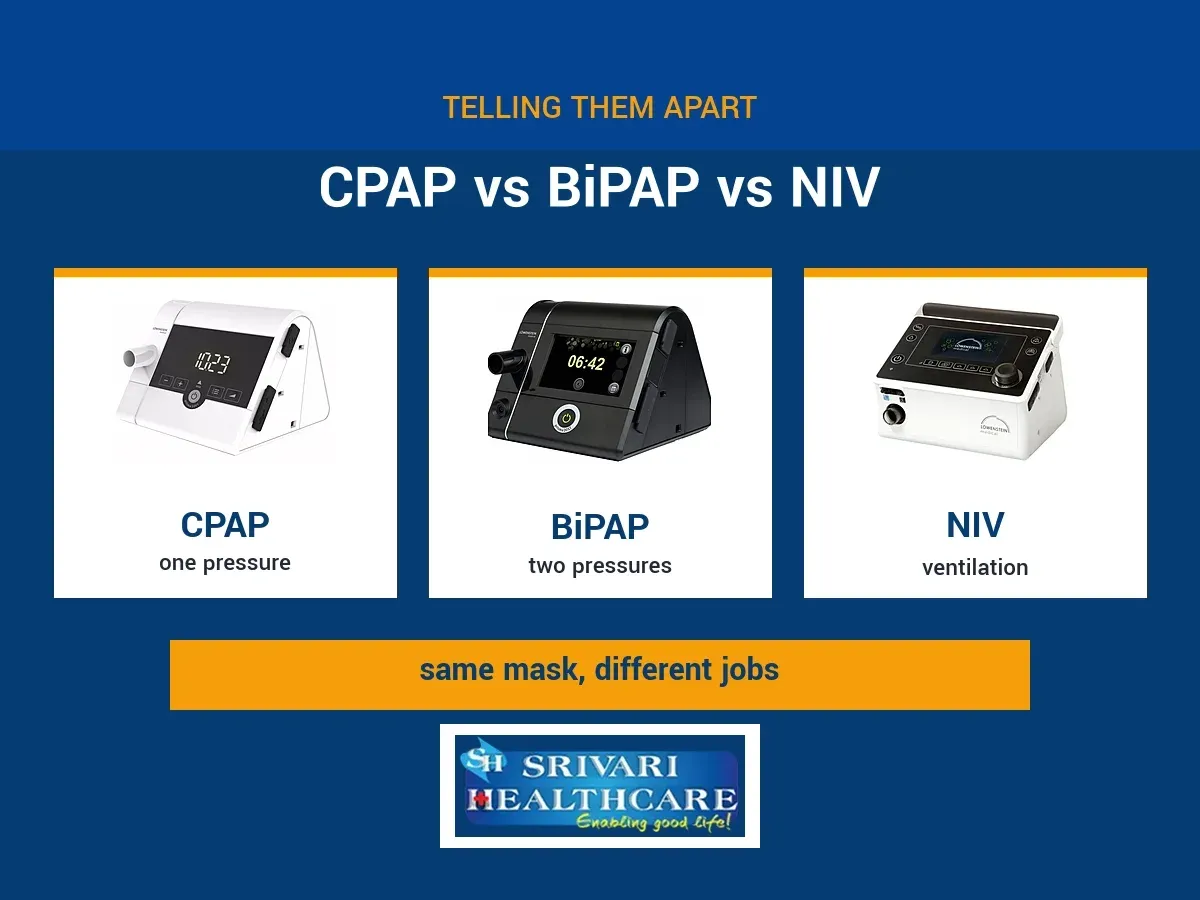 Sleep & Respiratory Health
CPAP vs BiPAP vs NIV: Understanding the Differences in Breathing Support
4 October 2026
 Sleep & Respiratory Health
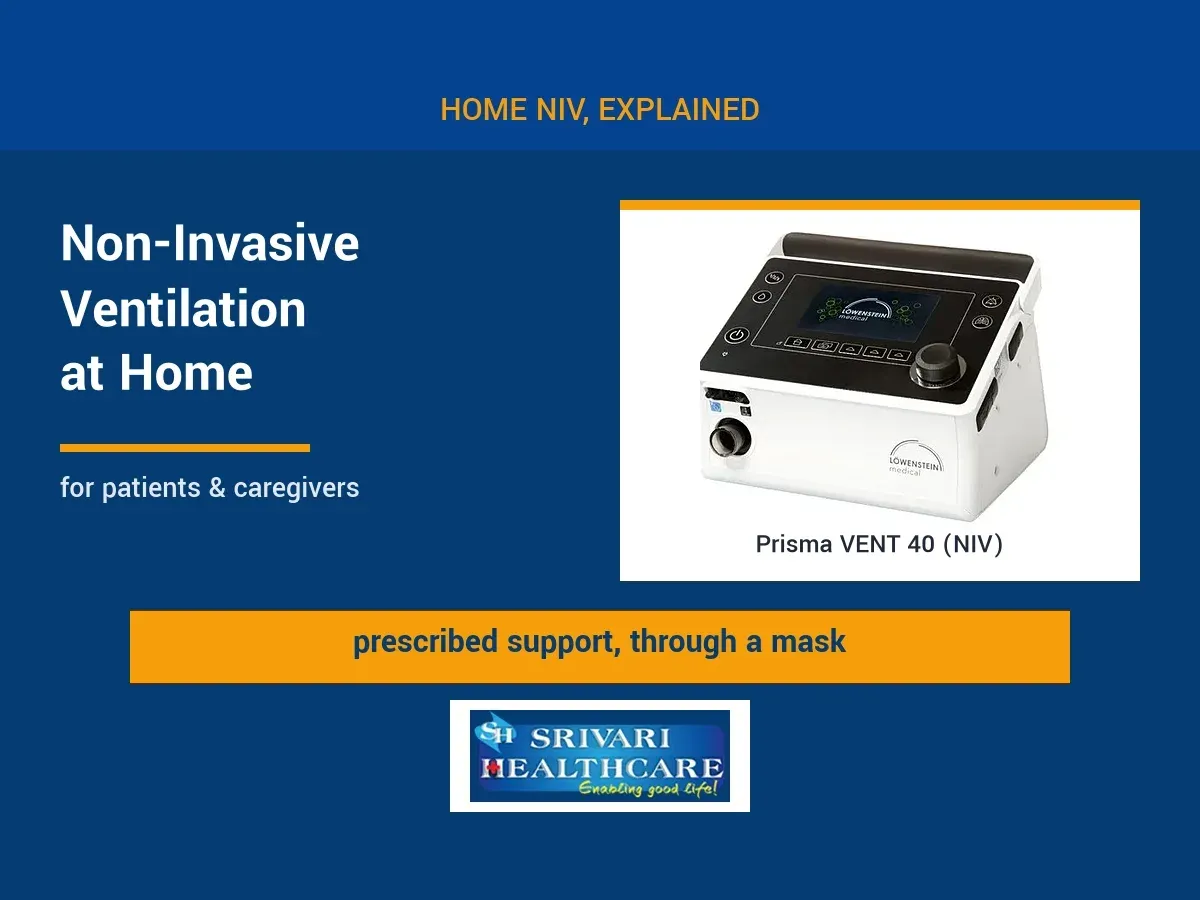
Home Non-Invasive Ventilation (NIV): A Complete Guide for Patients and Caregivers
30 September 2026
 Sleep & Respiratory Health
Best Auto CPAP Machine in India – Complete Buying Guide (2026)
30 April 2026