

How to Choose a Home NIV Ventilator: 10 Things to Check Before Buying
Ten things to check before buying a home NIV ventilator — starting with the prescription, then modes, pressure, mask fit, noise, monitoring, battery, accessories, training and after-sales support.
Introduction
Choosing a home NIV ventilator is different from purchasing an ordinary consumer product.
The most important question is not simply which device has the most features or the lowest price.
The equipment should match the therapy prescribed by the treating healthcare professional.
Before purchasing a home NIV device, patients and caregivers should consider clinical requirements, ventilation modes, comfort, accessories, battery options, installation and after-sales support.
1. Start With the Prescribed Therapy
The first step is to understand what therapy has been prescribed.
Ask your healthcare professional:
- What type of respiratory support is required?
- Which ventilation mode is required?
- What pressure or support range is required?
- How frequently should therapy be used?
- Is long-term home NIV appropriate?
The prescription should guide the equipment selection. If the terminology is new, our guide to home non-invasive ventilation explains how a home setup works.
2. Check the Required Ventilation Modes
Different NIV devices support different ventilation modes.
Before purchasing, check whether the device supports the mode prescribed for the patient.
Do not select a device simply because it has more modes. The important question is: does the device support the therapy required for this patient?
3. Consider Pressure and Support Requirements
Pressure capability can be an important specification.
However, a higher pressure range does not automatically mean that a device is better or more appropriate.
The required pressure and therapy settings should be determined by the healthcare professional.
4. Check Mask Compatibility
The mask is an important part of the NIV system.
When comparing equipment, consider:
- Mask compatibility
- Available mask types
- Fit
- Comfort
- Air leakage
- Replacement availability
A suitable mask can contribute significantly to the patient's overall experience.
5. Consider Noise and Comfort
For patients using respiratory support during sleep, operating noise can be an important consideration.
Also consider mask comfort, device design, the display, circuit arrangement, humidification requirements and ease of handling.
Comfort should be considered together with clinical suitability.
6. Look at Display and Monitoring
A clear display can make routine equipment operation easier for patients and caregivers.
Depending on the device, information may include:
- Pressure
- Flow
- Volume
- Therapy information
- Device alerts
The available monitoring features should be considered in relation to the patient's prescribed therapy.
7. Consider Battery and Power Backup
Power continuity can be important for patients who depend on respiratory support.
Before purchasing, ask:
- Is battery backup available?
- What is the expected operating time?
- How is the battery charged?
- Does runtime vary depending on therapy settings?
- Is additional backup power recommended?
Actual battery performance should be confirmed from the current manufacturer documentation and the specific configuration.
8. Check Accessories and Compatibility
Before purchasing, confirm the availability of:
- Masks
- Breathing circuits
- Filters
- Humidification components
- Power accessories
- Replacement parts
Long-term availability of compatible accessories is an important consideration.
9. Consider Installation and Training
Patients and caregivers may need professional guidance when starting home NIV.
Ask the provider about installation, device orientation, mask fitting, caregiver training, cleaning, maintenance, troubleshooting and technical support. Our home NIV setup guide covers what that involves day to day.
10. Evaluate After-Sales Support
Medical equipment may be used over an extended period.
Before purchasing, ask about:
- Warranty
- Service availability
- Technical assistance
- Replacement accessories
- Maintenance
- Local support
- Response time for technical issues
Looking for a CPAP, BiPAP or Oxygen Concentrator?
Free home delivery, professional installation by a respiratory therapist and 24/7 support across Chennai. Authorized Löwenstein Medical dealer.
After-sales support can be an important part of the overall equipment decision.
Home NIV Ventilator Comparison Checklist
| Factor | What to check |
|---|---|
| Prescription | Required therapy |
| Ventilation modes | Matches prescribed mode |
| Pressure | Required clinical range |
| Mask | Fit and compatibility |
| Comfort | Noise and usability |
| Display | Ease of use |
| Battery | Backup requirement |
| Accessories | Availability |
| Training | Setup and caregiver education |
| Service | Warranty and technical support |
Why Professional Guidance Matters
A home NIV ventilator should not be selected only by comparing online prices or specifications.
The appropriate equipment depends on the patient's medical requirement and prescribed therapy.
The healthcare professional determines the appropriate treatment, while the equipment provider can assist with device selection, accessories, setup, training and technical support.
Frequently Asked Questions
What is the most important factor when choosing a home NIV ventilator?
The device should support the therapy prescribed for the patient.
Should I choose based only on price?
No. Clinical suitability, compatibility, support, accessories and long-term servicing should also be considered.
Is battery backup important?
It may be important for patients who require respiratory support during power interruptions. The requirement should be discussed with the healthcare and equipment provider.
Do I need professional setup?
Professional setup and training can help patients and caregivers understand how to use the equipment according to the prescribed instructions.
Exploring a Suitable NIV Device
Once the required therapy has been established, patients and caregivers can compare devices against the criteria above.
For patients who have been prescribed NIV, you can review the Prisma VENT 40 specifications and contact the team with product enquiries.
Conclusion
Choosing a home NIV ventilator requires more than comparing prices.
Start with the prescribed therapy and then evaluate ventilation modes, pressure capability, mask compatibility, comfort, battery options, accessories, training and after-sales support.
Once the clinical requirement is clear, patients and caregivers can make a more informed equipment decision together with their healthcare professional and respiratory-care provider.
Related Pages
If you are comparing equipment or looking at what is available in Chennai:
- CPAP machines — devices, specifications and pricing
- BiPAP machines — bilevel devices and specifications
- Ventilator rental in Chennai — home ventilators on rent
- BiPAP rental in Chennai
- CPAP rental in Chennai
Equipment should be selected according to the therapy prescribed by your treating healthcare professional.
More in Sleep & Respiratory Health
View all →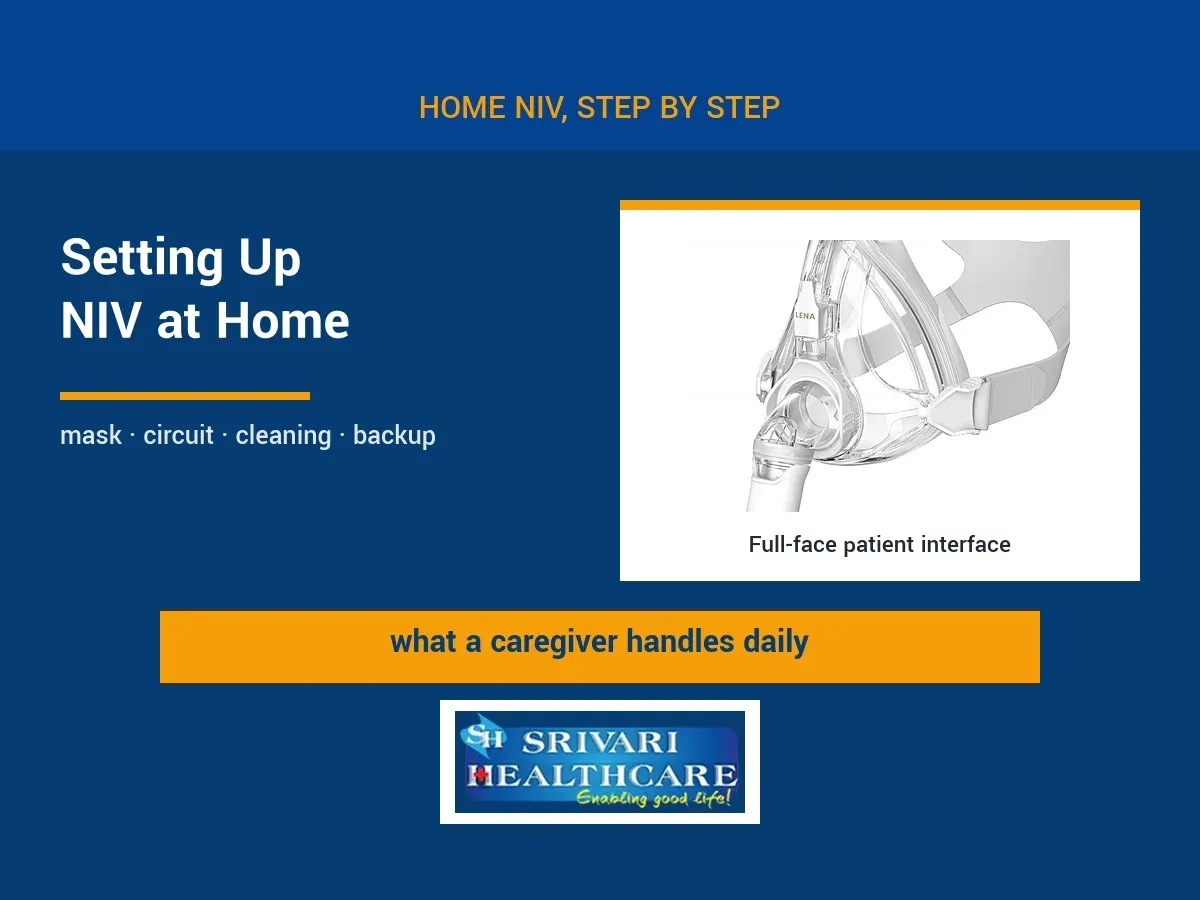 Sleep & Respiratory Health
Home NIV Setup: Equipment, Mask, Cleaning and Caregiver Tips
6 October 2026
 Sleep & Respiratory Health
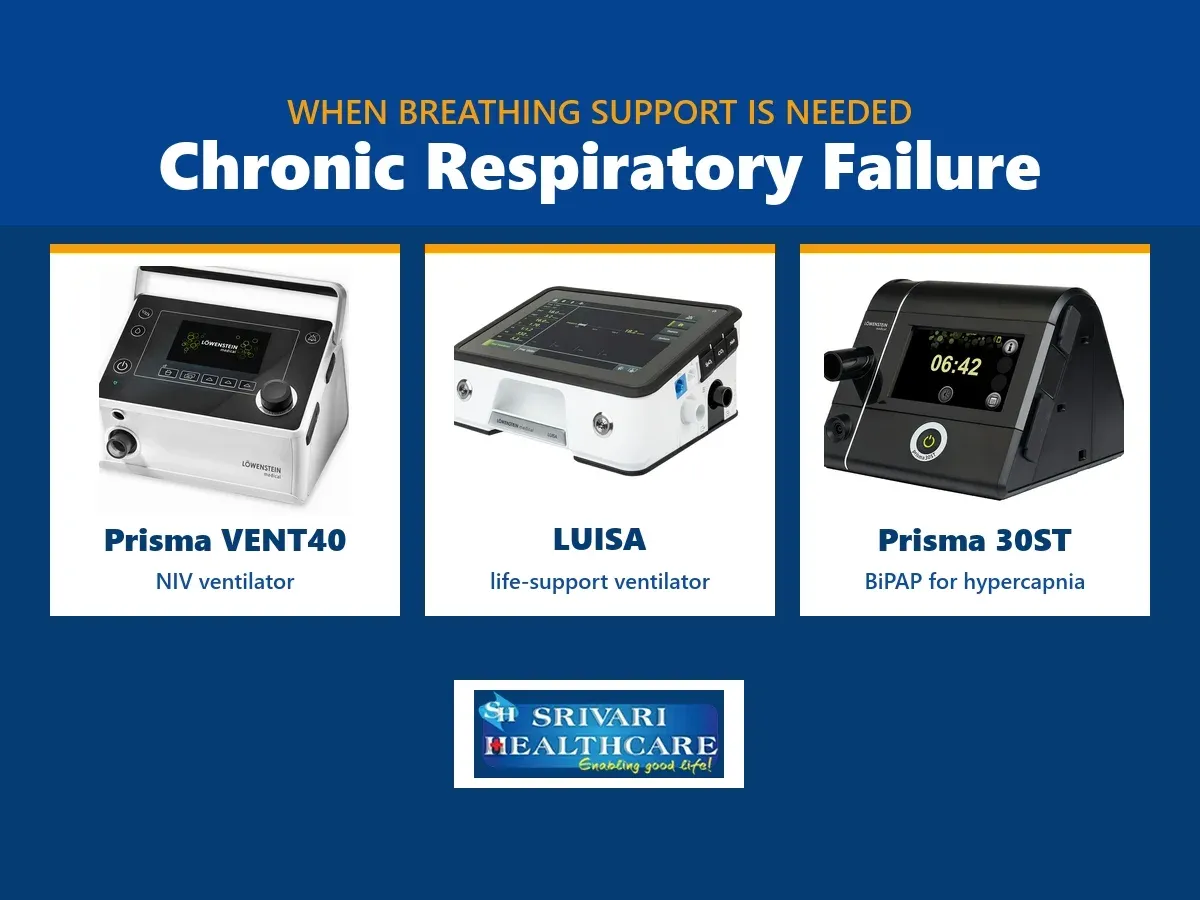
Chronic Respiratory Failure: Understanding When Breathing Support May Be Needed
5 October 2026
 Sleep & Respiratory Health
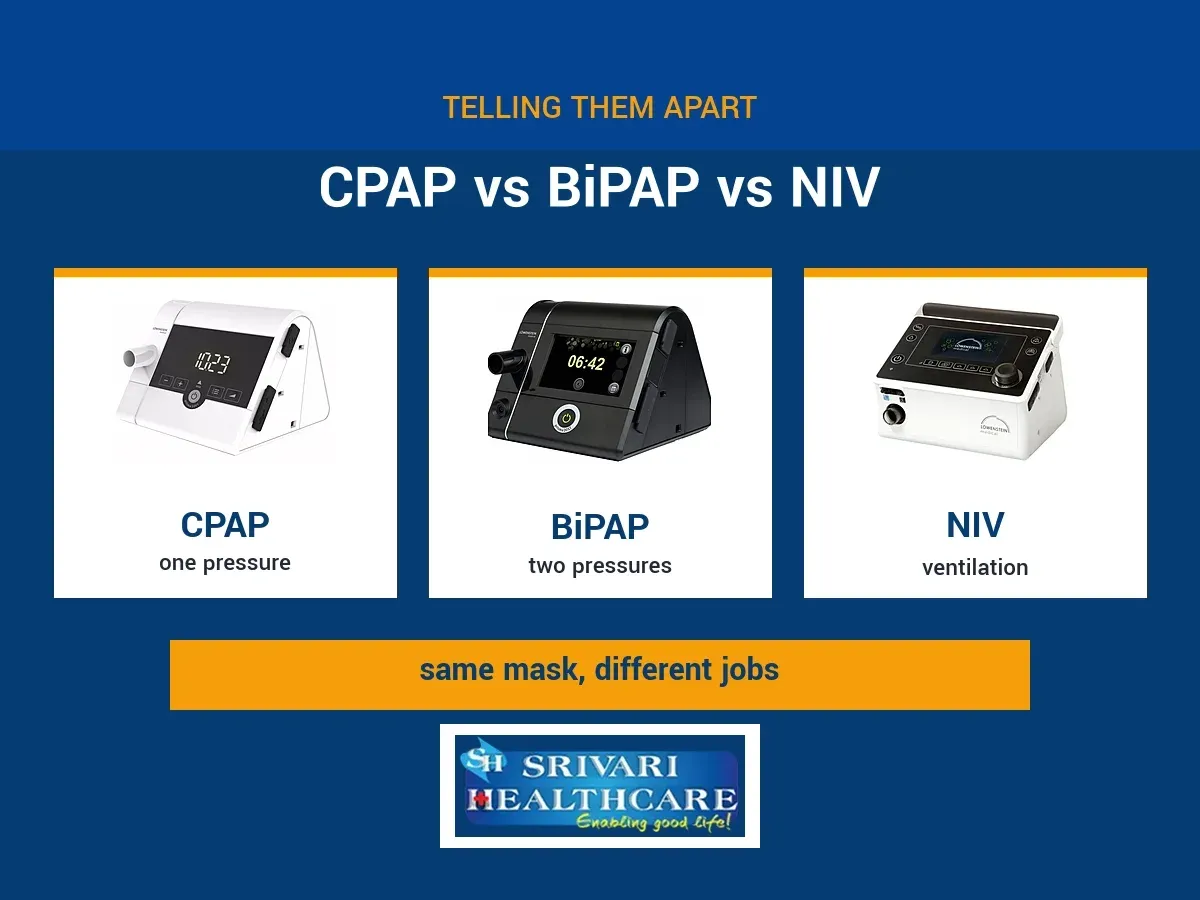
CPAP vs BiPAP vs NIV: Understanding the Differences in Breathing Support
4 October 2026