

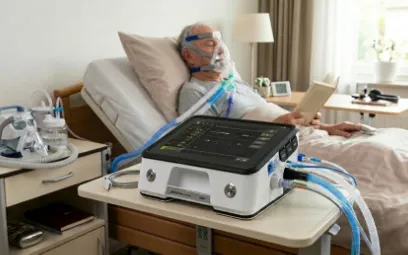
Caring for a Tracheostomy Patient on a Home Ventilator
A tracheostomy — a surgical opening in the neck connecting directly to the windpipe — is used when a patient needs long-term ventilator support, cannot protect their airway naturally, or needs frequent suctioning. Home care is very achievable, but requires specific routines.
Daily Tracheostomy Care
Tracheostomy care must be clean, consistent and performed as trained by hospital staff.
- Clean the stoma (opening) site daily, checking for redness, discharge, or bad odour
- Change the dressing/ties as instructed, keeping the tube secure but not too tight
- Suction secretions using sterile technique, only as trained by hospital staff
- Ensure the inner cannula (if present) is cleaned or changed on schedule
Equipment Every Home Should Have
Keep emergency and routine tracheostomy supplies available at the bedside.
- A spare tracheostomy tube of the same size (and one size smaller) at the bedside at all times
- A working suction machine with spare catheters
- Sterile saline for cleaning and humidification
- Emergency re-insertion kit, with the technique reviewed regularly with caregivers
Ventilator Connection Care
The ventilator connection should be checked frequently to prevent airflow problems.
- Check the tracheostomy-to-ventilator connection for secure fit at every shift change
- Watch for condensation buildup in the tubing, which can affect airflow
- Keep humidification adequate — dry air thickens secretions and increases blockage risk
Warning Signs Requiring Immediate Action
These signs need urgent medical attention.
- Tube appears dislodged or has come out — this is a medical emergency
- Sudden, severe breathing difficulty or noisy breathing
- Bleeding at the stoma site
- High fever with thick, discoloured, or foul-smelling secretions
Preventing Common Complications
Regular repositioning, meticulous hygiene, and prompt attention to skin or secretion changes prevent the majority of tracheostomy-related complications at home.
How Srivari Healthcare Helps
Srivari Healthcare provides tracheostomy-compatible ventilators along with suction machines and accessories, and trains caregivers on safe daily management.