


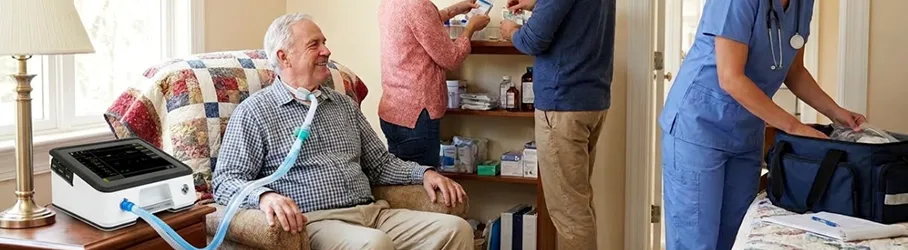
Moving From Hospital to Home Safely
Discharging a patient on a ventilator is a major transition — for the patient and for the family. With the right planning, home can be just as safe as a hospital ward, and far more comfortable.
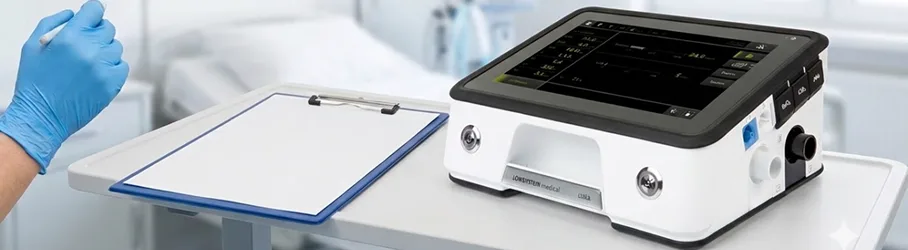
Before Discharge: What to Confirm
Before the patient leaves hospital or ICU, make sure the clinical team has confirmed the ventilation prescription, home-care requirements and emergency plan.
- The exact ventilator model, settings, and backup power requirements prescribed by the treating pulmonologist/intensivist
- Whether the patient needs invasive (tracheostomy) or non-invasive (mask-based) ventilation
- A written care plan covering suction schedules, alarm limits, and emergency contacts
- Caregiver training completed and signed off by hospital staff before leaving
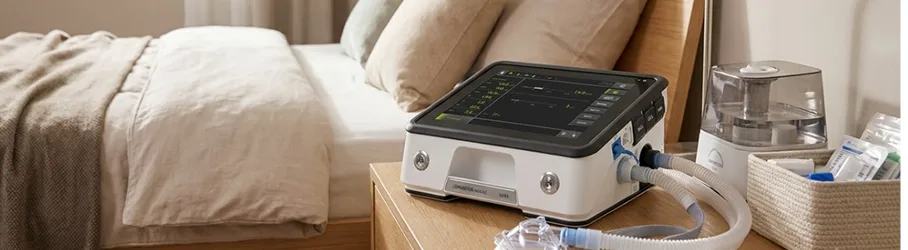
Setting Up at Home
The room and bedside area should be prepared before the ventilator arrives so installation and training can happen without delay.
- A clean, ventilated room with stable electricity and a nearby power backup (UPS/battery)
- Easy access to oxygen concentrator/cylinder if prescribed alongside the ventilator
- Pulse oximeter for daily monitoring
- Emergency numbers (doctor, ambulance, equipment provider) written and visible near the bed
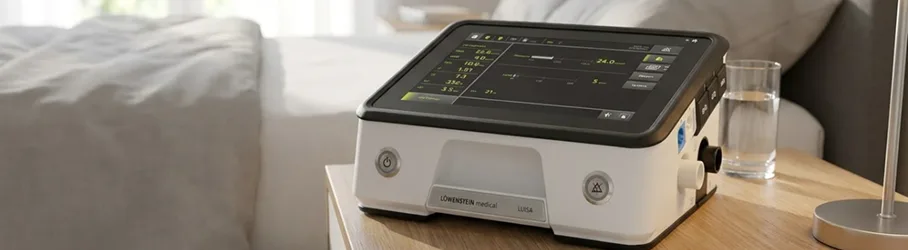
First Two Weeks at Home
The first days after discharge are the highest-risk period. Watch for changes in breathing pattern, skin colour, secretions, or fever, and keep the discharge summary and ventilator settings sheet on hand for every follow-up call.

How Srivari Healthcare Helps
We deliver and install the prescribed ventilator at home, walk the family through every alarm and setting, and remain on call for technical support after discharge — so the transition from hospital bed to home bed is smooth from day one.