

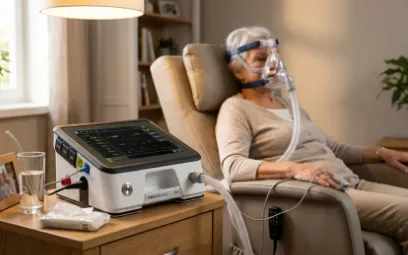
Supporting Weak Breathing Muscles at Home
Respiratory muscle weakness — whether from a chronic illness, stroke, spinal cord injury, or a progressive neuromuscular condition — reduces a patient's ability to take deep breaths and clear secretions effectively, even when the lungs themselves are otherwise healthy.
How Muscle Weakness Affects Breathing
Weak respiratory muscles can affect oxygen, carbon dioxide clearance and secretion management.
- Shallow breathing leads to lower oxygen and higher CO2 over time
- Weak cough makes it harder to clear mucus, raising infection risk
- Muscles tire faster during activity, sleep, or illness, increasing ventilator need at those times
Ventilator Support Approaches
Support may combine ventilatory assistance, secretion clearance and planned rest periods.
- Assisted breathing (NIV or invasive): The machine takes over part or all of the breathing effort
- Cough assist devices: Used alongside the ventilator to help clear secretions when the natural cough is too weak
- Scheduled rest periods on the ventilator: Even patients who can breathe unaided for stretches often benefit from scheduled ventilator rest, especially overnight
Caregiver Priorities
Home routines should focus on preventing infections and preserving strength.
- Chest physiotherapy and positioning to help drainage of secretions
- Monitoring for early signs of chest infection — fever, colour change in phlegm, increased breathlessness
- Nutrition support, since breathing muscles need adequate strength and energy just like any other muscle
- Gentle, doctor-approved breathing exercises where the patient's condition allows
Watching for Progression
Respiratory muscle weakness can change gradually or suddenly, depending on the underlying cause. Regular pulmonology review — not just equipment checks — is essential to catch changes early.
How Srivari Healthcare Helps
Srivari Healthcare's team can recommend the right combination of ventilator and cough-assist support based on your doctor's prescription.