

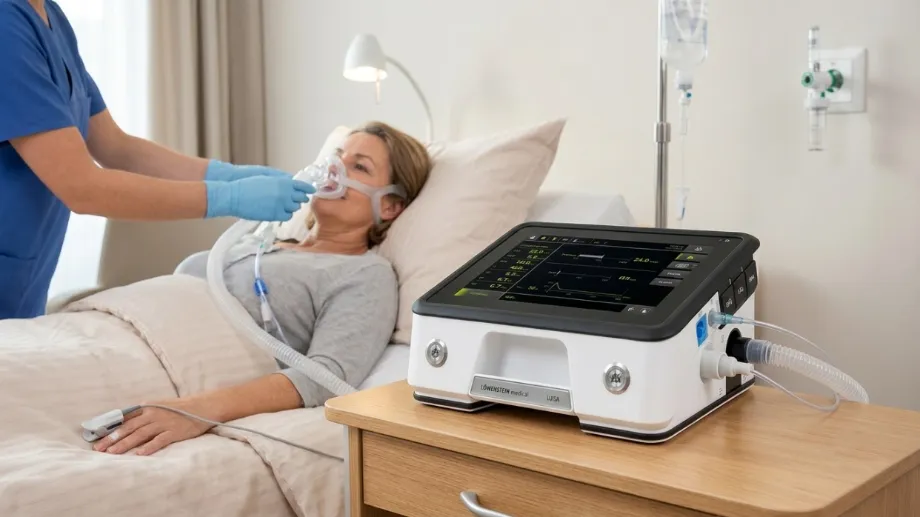
Why Neuromuscular Patients Often Need Ventilator Support
Conditions such as Motor Neuron Disease (MND/ALS), Muscular Dystrophy, Myasthenia Gravis, and Guillain-Barré Syndrome can weaken the muscles used for breathing — the diaphragm and chest wall muscles — even when the lungs themselves are healthy. As this weakness progresses, patients tire out from the simple act of breathing, especially at night.
Signs That Point to a Need for Ventilator Support
Families should discuss symptoms and test changes with the treating specialist early.
- Frequent chest infections or difficulty clearing secretions
- Disturbed sleep, frequent night waking, or morning headaches
- Daytime sleepiness despite a full night's sleep
- Weak cough and reduced ability to speak in full sentences
- A pulmonologist's assessment showing declining respiratory muscle strength
Support Options
Care typically progresses in stages:
- 1Night-time NIV — mask ventilation during sleep only, in earlier stages
- 2Extended NIV — daytime use added as weakness increases
- 3Tracheostomy ventilation — for patients who can no longer protect their airway or need continuous support
Caring for a Neuromuscular Patient on a Ventilator
Care routines should protect the airway, skin and nutrition while keeping an emergency plan ready.
- Regular chest physiotherapy and secretion clearance (manual or with a cough-assist device)
- Careful skin and mask-fit checks, since these patients cannot always reposition themselves
- Nutrition support, since swallowing muscles are often affected too
- A clear emergency plan, since weakness can progress faster than expected
A Note for Families
These conditions often involve a gradual increase in ventilator dependence. Having equipment that can be upgraded or exchanged as needs change — rather than purchased outright — is often the more practical and affordable path.
How Srivari Healthcare Helps
Srivari Healthcare offers flexible rental plans that scale with your loved one's changing respiratory needs.