
What Is NIV and Who Needs It?
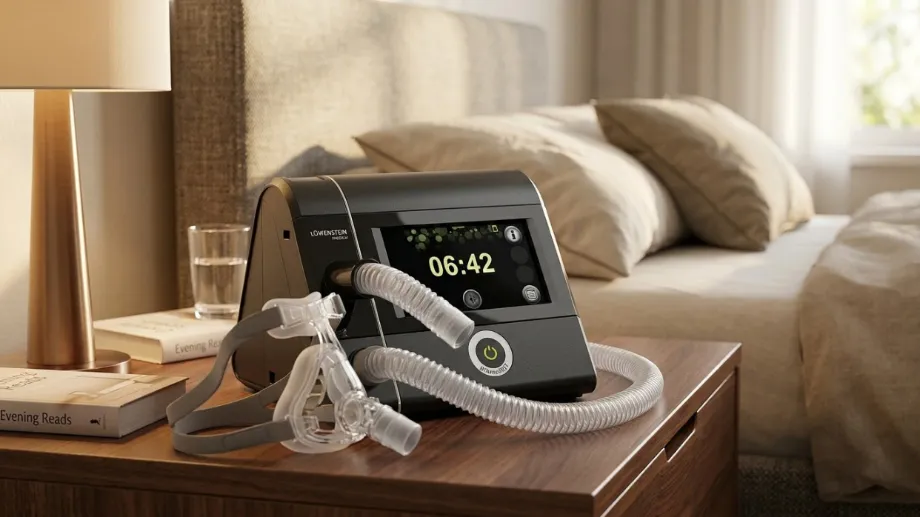
Non-Invasive Ventilation (NIV) delivers breathing support through a mask — over the nose, mouth, or full face — rather than through a surgical airway. It's often the first step in home ventilator support before, or instead of, more invasive options.
Conditions Commonly Treated With NIV
NIV may be prescribed for several respiratory and sleep-related conditions.
- COPD with chronic CO2 retention
- Obesity Hypoventilation Syndrome
- Neuromuscular weakness in earlier stages
- Chronic heart failure with breathing difficulty
- Sleep-related breathing disorders requiring more support than standard CPAP
How NIV Helps
NIV reduces the work of breathing by giving extra pressure support with each breath, allowing tired respiratory muscles to rest — particularly overnight, when breathing naturally becomes shallower.
Types of Masks
Mask choice affects comfort, leak control and daily use.
- Nasal mask: Covers the nose only; more comfortable, but less effective if the patient breathes through the mouth
- Full-face mask: Covers nose and mouth; better for mouth-breathers, needs more care with fit
- Nasal pillows: Minimal contact, good for lighter support needs
Living With NIV at Home
Consistent use and correct mask fit are the main priorities.
- Correct mask fit is everything — too loose leaks air, too tight causes pressure sores
- Clean the mask and tubing daily to prevent skin irritation and infection
- Use humidification if prescribed, especially in dry or air-conditioned rooms
- Track hours of use — benefit depends on consistent, prescribed usage
Signs NIV May Need to Be Reviewed
Increasing breathlessness despite correct use, mask intolerance, worsening skin sores, or persistent low oxygen readings should be discussed with the treating doctor rather than adjusted independently.
How Srivari Healthcare Helps
Srivari Healthcare stocks a range of NIV masks and machines, and helps families find the right fit and settings under medical guidance.