
What Is a Split-Night Sleep Study?
Diagnosis in the first half of the night, CPAP titration in the second. When a study is allowed to split, its advantages and limits, and who it suits.
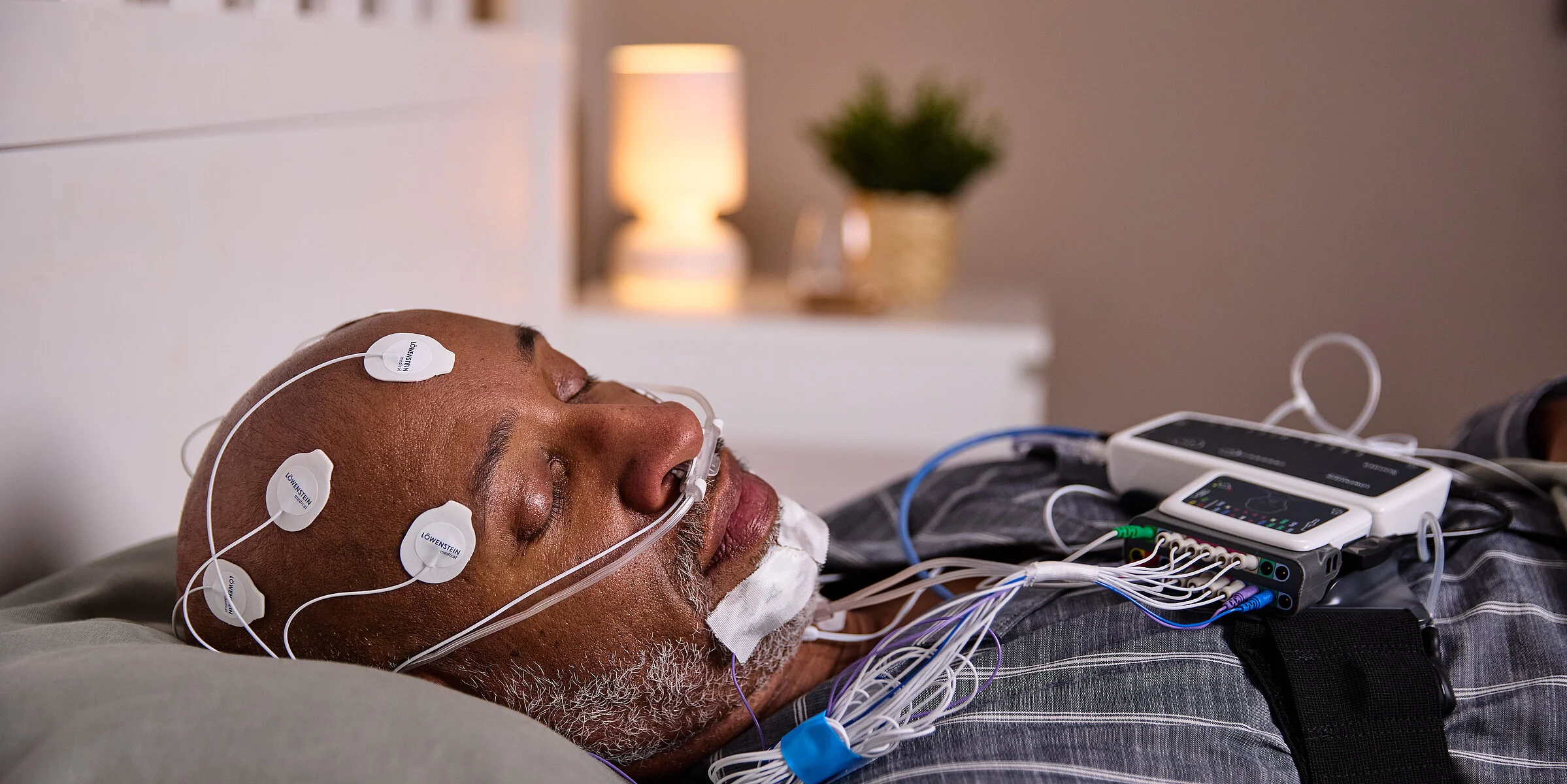
A split-night sleep study does two jobs in one night. The first part is a normal diagnostic study. If it shows severe sleep apnea early on, CPAP is started and adjusted for the rest of the night, so you leave with both a diagnosis and a starting pressure. Here is how it works, who it suits, and when a separate titration night is still the better route.
How the night is divided
You are wired up exactly as for a full overnight study: brain waves, eye and chin sensors, heart rhythm, airflow, breathing belts and oxygen. Then you go to sleep.
- Diagnostic half. The technician watches the recording. If enough sleep has been recorded and the breathing events are frequent enough to confirm severe sleep apnea, the study can switch over.
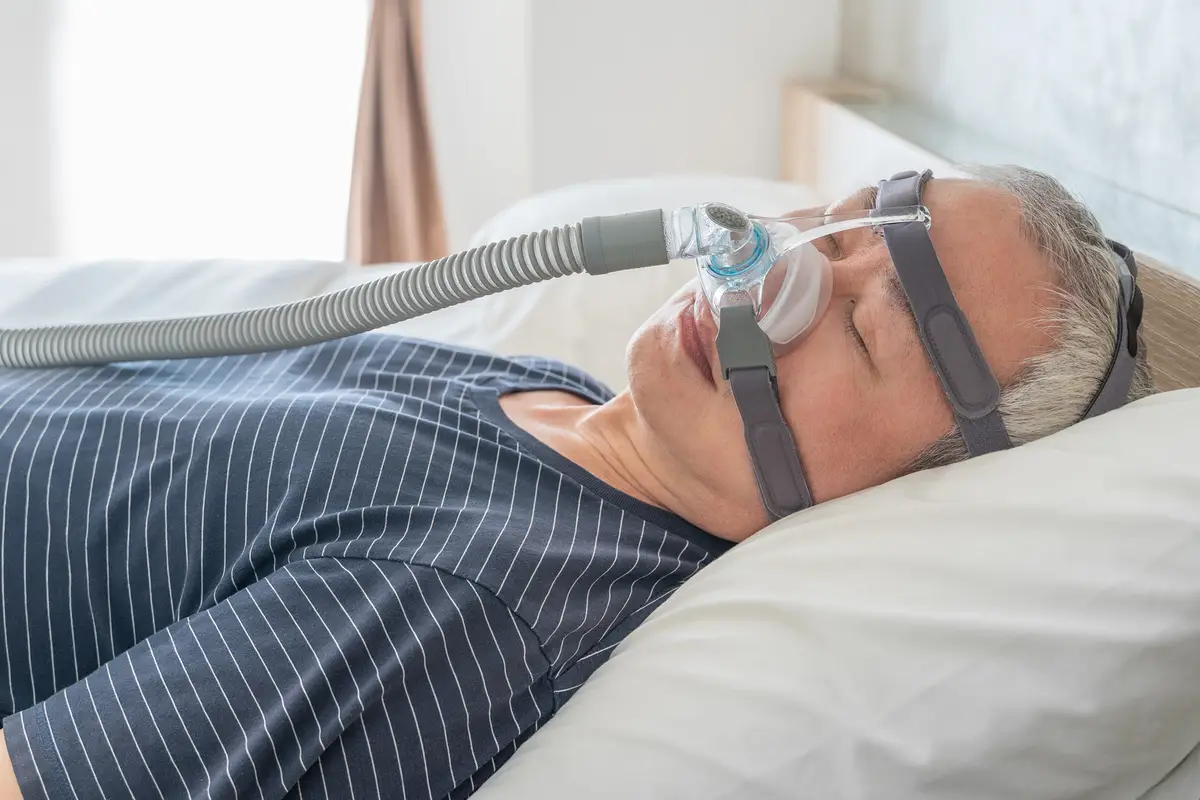
- The switch. You are woken briefly, fitted with a CPAP mask, and helped back to sleep.
- Titration half. The technician raises the pressure in small steps until the apneas, hypopneas, snoring and oxygen drops are controlled, the same method used on a full CPAP titration study.
If the first half does not show severe apnea, nothing switches. The whole night stays diagnostic, which is exactly what a standard study would have been.
When a study is allowed to split
The American Academy of Sleep Medicine's practice parameters set out when the switch makes sense. In plain terms:
- At least two hours of diagnostic recording have been completed.
- The breathing events are frequent enough to be clearly severe. The usual threshold is an AHI of 40 or more per hour; between 20 and 40, the physician may still split based on what the recording shows.
- There is enough night left, normally three hours or more, to titrate CPAP properly, including some dream (REM) sleep and time lying on the back.
That last point matters. Apnea is usually worst on the back and in REM sleep, and REM comes mostly in the second half of the night. A titration that never reaches those conditions may set the pressure too low.
The advantages
- One night instead of two. Less time off work and fewer sleepless nights in strange surroundings.
- Faster treatment. People with severe apnea, who need treatment soonest, can start CPAP within days.
- You try CPAP with help at hand. A technician can change the mask size or style the moment it leaks or feels wrong.
The limitations
Sleep study and CPAP therapy in Chennai
Home sleep test with Scala / SAMOA, Sonata polysomnography in our sleep lab — and the CPAP or BiPAP therapy that follows.
- Less time to fine-tune. With only half a night, there may not be enough REM or back-sleeping to confirm the pressure holds in every position.
- A short diagnosis. Two or three hours of recording may miss problems that appear later in the night.
- Waking in the middle. Some people find it hard to fall asleep again with a mask on for the first time.
If the titration half is too short or does not control the events well, the physician may ask for a full titration night. That is not a failure; it simply means the pressure needs more time to set.
Is a split-night study done at home?

No. A split-night study needs a technician watching the recording live, to decide when to switch and to adjust the pressure. Home studies, including a Level 2 home polysomnography or a Level 3 home sleep test, record the whole night for diagnosis only. If a home study shows sleep apnea, pressure is then found either with a separate titration night or with an auto CPAP whose data the doctor reviews.
Who is a good candidate?
- People whose symptoms strongly suggest moderate to severe sleep apnea: loud snoring, witnessed pauses, gasping and marked daytime sleepiness.
- People who would find two separate nights hard to arrange.
- People willing to try CPAP the same night if it is needed.
It is less suitable when the doctor is looking for other sleep disorders, such as narcolepsy or unusual movements in sleep, where a full night of diagnosis is needed.
Frequently asked questions
Will I know in advance whether my study will split?
No. Whether it splits depends on what the first part of the night shows. It helps to agree beforehand that you are willing to try CPAP if it is offered.
Is a split-night study as accurate as two separate nights?
For people with clearly severe sleep apnea it usually gives the doctor what they need. When the titration part is short or incomplete, a full titration night may follow.
Does a split-night study cost more?
It depends on the centre. Our prices for each study level and for CPAP titration are listed on the sleep study in Chennai page.
Not sure which study you need? Compare the sleep study levels and prices in Chennai, or call us and we will explain the options.
1-minute check
Do you need a sleep study?
Answer six quick questions about your sleep. It tells you whether a test is worth doing, and our team can call you back.
Do you snore loudly, loud enough to be heard through a closed door?
Buy or rent in Chennai
Sleep study test in Chennai
Free home delivery, installation by a respiratory therapist and 24/7 support. Authorized Löwenstein Medical dealer.
- DeviceHome sleep study equipment — ScalaView page
- LabSonata polysomnographyView page
- Buyprisma SMART auto CPAPView page
Home sleep study in ChennaiSleep apnea test in ChennaiKurattai (snoring) treatmentSleep lab ChennaiSleep study equipmentAll sleep diagnosticsRental enquiryAsk for a quoteAll products