
Is a Sleep Study Painful? What It Actually Feels Like
No needles, no blood, no current. What each sleep study sensor feels like, what people actually find uncomfortable, and five ways to make the night easier.
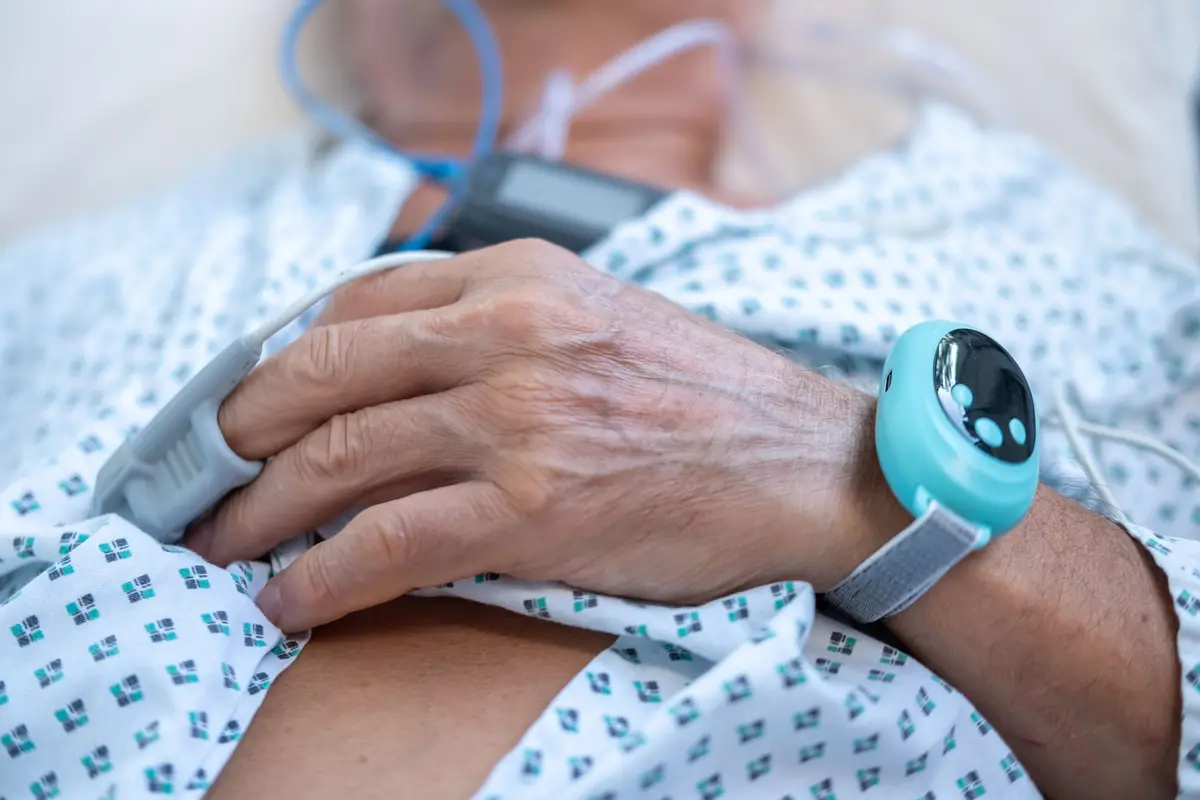
Short answer: no. A sleep study does not use needles, does not draw blood and does not pass any current into your body. Every sensor sits on the surface of the skin and simply listens. What people actually find hard is something else, and it helps to know what that is before the night.
What touches your body, sensor by sensor
How many sensors you wear depends on the level of the study. A Level 3 home test uses only a few; a full polysomnography uses more. Here is what each one feels like.
- Nasal cannula (airflow). A thin, soft plastic tube that rests just inside the nostrils and loops over the ears. It is the one most people notice. It can tickle for the first few minutes, much like oxygen tubing in a hospital, and then fades into the background.
- Chest and tummy belts (breathing effort). Two soft elastic bands worn over a vest or night suit. They should feel snug, like a waistband, never tight. If one digs in when you lie on your side, it can be loosened.
- Finger clip (oxygen). A small clip or soft sleeve on one fingertip that shines a red light through the skin. No pressure beyond a light grip.
- Scalp, eye and chin electrodes (brain waves, eye movements, muscle tone). Only used in Level 1 and Level 2 studies. Small discs are held on with a conductive paste or sticky pads. There is no sensation from the electrode itself; the paste feels cool and slightly sticky.
- Chest stickers (heart rhythm). The same press-on ECG patches used in a routine heart check.
Our guide to what each sleep study sensor measures explains what the readings are used for.
So what is uncomfortable?
Pain is rarely the issue. These are the things people usually find uncomfortable:
- Falling asleep with wires on. The first half hour feels strange. Most people fall asleep later than usual and then sleep reasonably well. The physician does not need a perfect night, only enough sleep to read.
- Turning over. You can move and change position freely. The cables are long enough, and the recorder is small. You may simply be more aware of turning than on a normal night.
- Taking the stickers off. Like removing a plaster, it is a quick tug. Peeling slowly in the direction of hair growth, or dabbing with a little warm water or coconut oil, makes it easier.
- Paste in the hair. After a study with scalp electrodes, a wash with warm water and shampoo removes it. Many people book the study on a night before a day off for this reason.
- A dry nose. The airflow tube can dry the nostrils slightly, especially in an air-conditioned room. A glass of water by the bed helps.
If you have sensitive skin
Tell the team when you book. If you have reacted to plasters, ECG stickers or medical tape before, different adhesives or a hypoallergenic tape can be used, and sensors can be placed to avoid broken or irritated skin. Mild redness where a sticker sat usually settles within a few hours. A rash that itches or spreads is worth mentioning to your doctor.
Is it different at home and in a lab?
Sleep study and CPAP therapy in Chennai
Home sleep test with Scala / SAMOA, Sonata polysomnography in our sleep lab — and the CPAP or BiPAP therapy that follows.
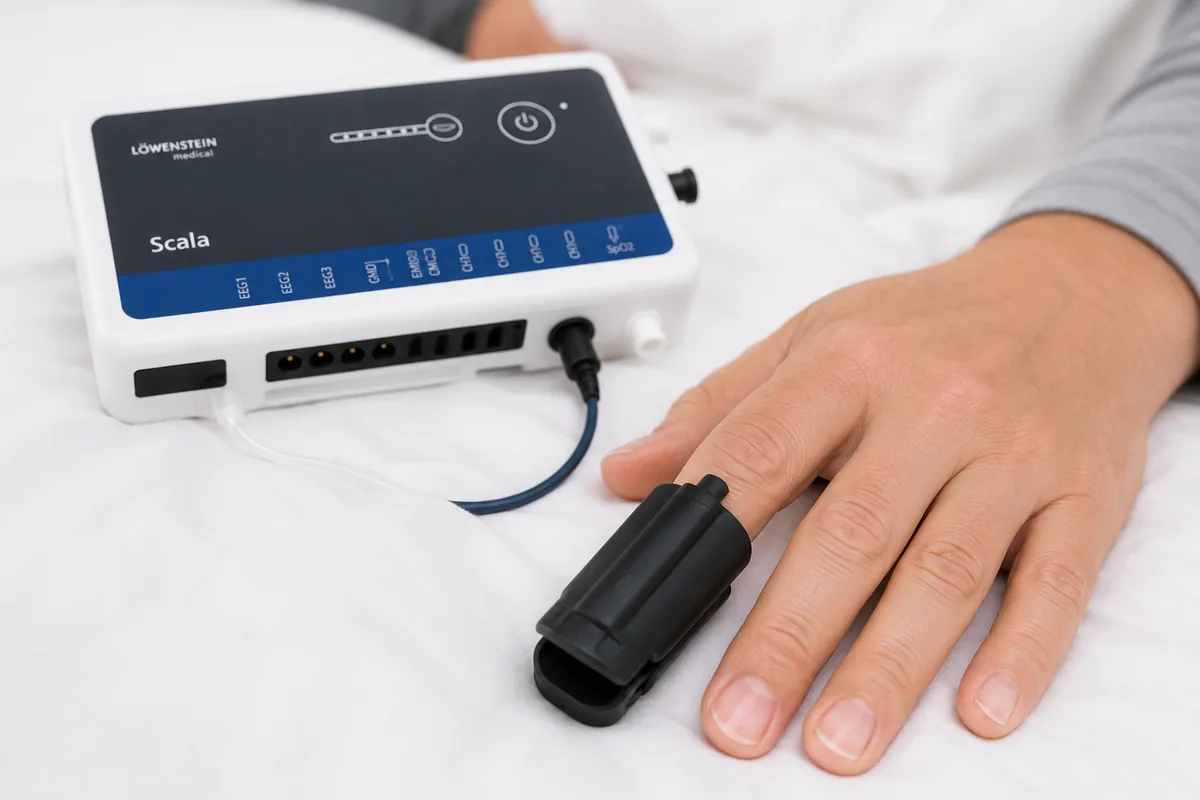
The sensors are the same kind; what changes is how many and where you sleep. A home sleep study uses the fewest sensors and your own bed, which is why most people find it the easiest. A Level 2 home polysomnography adds the scalp, eye and chin electrodes but is still done at home. A lab study adds a technician nearby and, often, a camera, which some people find reassuring and others find hard to forget.
A CPAP titration night feels different
If you have already been diagnosed and are coming back for a CPAP titration study, you will also wear a mask with air flowing through it. That is not painful either, but it takes more getting used to than the sensors. Wearing the mask for ten or fifteen minutes while awake, a day or two before, makes the night much easier.
Five things that make the night easier
- Skip the afternoon nap and avoid tea or coffee after about 2 pm, so you are tired at bedtime.
- Wash your hair and leave it dry, with no oil. Sensors stick better and come off more easily.
- Wear a loose two-piece night suit; belts and wires are easier over a top than a nightie or lungi.
- Keep to your usual bedtime routine and room temperature.
- Do not worry if you wake in the night. Go to the bathroom if you need to; the recorder comes with you.
There is a full checklist in how to prepare for a sleep study.
Frequently asked questions
Does a sleep study involve needles or blood tests?
No. All sensors rest on the skin. Nothing is injected and no blood is taken as part of the study.
Can I go to the bathroom during a sleep study?
Yes. At home the recorder is small enough to take with you. In a lab, the technician can unplug the cables for a moment.
What if I cannot sleep at all?
Almost everyone sleeps at least a few hours, even if it feels like less. If the recording turns out too short to read, the physician may advise repeating it.
Is a sleep study safe for elderly patients?
Yes. The sensors are the same simple surface sensors at any age. A home study is often easiest for elderly patients because they stay in familiar surroundings.
Have a question about which study suits you? See the sleep study options and prices in Chennai, or call us and we will talk you through it.
1-minute check
Do you need a sleep study?
Answer six quick questions about your sleep. It tells you whether a test is worth doing, and our team can call you back.
Do you snore loudly, loud enough to be heard through a closed door?
Buy or rent in Chennai
Sleep study test in Chennai
Free home delivery, installation by a respiratory therapist and 24/7 support. Authorized Löwenstein Medical dealer.
- DeviceHome sleep study equipment — ScalaView page
- LabSonata polysomnographyView page
- Buyprisma SMART auto CPAPView page
Home sleep study in ChennaiSleep apnea test in ChennaiKurattai (snoring) treatmentSleep lab ChennaiSleep study equipmentAll sleep diagnosticsRental enquiryAsk for a quoteAll products