

 +91 99410 64349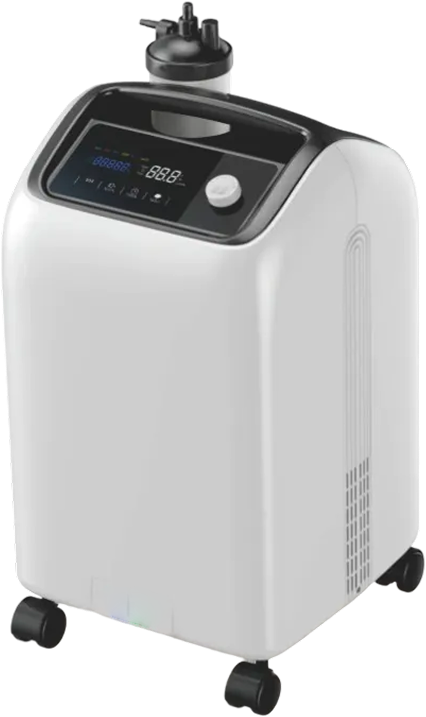
Reliable Oxygen Concentrators for Clinics: Easy to Use & Durable
Your Attractive Heading
Why Clinics Need Reliable Oxygen Concentrators?
- Continuous supply: Clinics often need oxygen continuously for multiple patients. Unlike cylinders, concentrators can generate oxygen from ambient air as long as there’s power.
- Lower long-term cost: After the initial purchase, operational costs are usually lower (less dependence on refills, simpler logistics).
- Better safety: Proper concentrators reduce the hazards associated with handling and storing high-pressure oxygen cylinders.
Key Features of an Easy-to-Use, Durable Oxygen Concentrator
To be effective in clinic settings (especially ones with high load, possibly less infrastructure), a good concentrator should have:
1.High oxygen purity
- Should deliver oxygen in the 90-95% range under rated flow. Equipment should maintain purity even in challenging conditions.
2.Flow flexibility & accurate flow controls
- Adjustable flow meter, ability to serve single or multiple patients. Easy-read flow meter (good visibility, avoid parallax errors).
3.Robust build & environment tolerance
- Since clinics may face high temperature, high humidity, dust, poor power stability, equipment needs to resist these. Rugged casing, filters that block dust, design that tolerates unstable voltage.
4.Low maintenance & spare parts availability
- Easy-to-clean filters, simple components, manuals, good after-sales support. Spare parts should be accessible for at least 1-2 years.
5.Power efficiency and backup options
- Clinics may face power outages or fluctuations. Devices that are energy efficient reduce running cost and heat load; backup power or battery options help in unreliable grid situations.
6.Noise & user comfort
- Quiet operation is important, especially in patient care areas. Also intuitive controls & displays so clinic staff can operate without specialized training.
7.Safety & alarms
- Low oxygen purity, flow interruption, power failure, overheating — these need alarms (audio/visual). Also compliance with safety standards (ISO, CE, etc.)..
Design Considerations for Clinic Settings
- Mobility:Wheels or handles so that units can be moved among wards, beds, etc. Clinics may need to shift units frequently.
- Durability in harsh conditions: Ability to work in high altitude, high humidity, and hot environments. Resist pests, dust, rough handling.
- Capacity:Depending on patient load, devices with higher flow (5-10 L/min or more) may be needed. If only low flow, multiple units or backups required.
Common Challenges & Solutions
Challenge
Potential Solution
Unstable power / voltage fluctuations
Use voltage stabilizers or built-in protection; have backup power/generators; choose energy-efficient models.
Dusty or humid environment
Use good intake filters, regular cleaning; choose models with rugged enclosures; plan for preventive maintenance
Lack of trained staff for maintenance
Provide training; ensure that manuals are clear & possibly multilingual; pick models with modular spare parts.
Noise disturbing patients
Select low-noise models; install away from patient beds if possible; use sound-dampening enclosures.